There is a distinction most musicians gesture at and few will define. Everyone says they like a record that breathes, that the takes with something wrong in them are the ones worth keeping, that perfection is death. Almost nobody, asked directly, can say where the line falls between the flaw that carries feeling and the one that is simply a flaw.
Ariel Posen can, and does, in a sentence: there is a massive difference between a mistake and an imperfection. What follows it is the useful part — that an imperfection is a feel or a texture, something that on paper could be played cleaner and in the moment is exactly what the section needs, and that he is not chasing imperfection at all. He is chasing the right thing, and has come to trust the first performance.
He arrived at that position the long way. Posen spent years as a session and touring guitarist behind other people, on other people’s records, serving songs that were not his — including nights in a studio above a Winnipeg nightclub, upstairs from a gig that had just finished. The solo career came late and, by his own account, deliberately so. In between he has made two kinds of record: songs, most recently Bannatyne, and the improvised solo-guitar Mile End sessions, which he describes not as sketches but as timestamps.
We sent him twelve questions and asked him to take only the ones that interested him. He took nine. What follows is that exchange, in his order, in his words.
One correction of ours, printed because he made it: we put it to him that Bannatyne was a record about a street. It is not. He says the street works as an overarching theme for the city of Winnipeg rather than as a subject in itself, and the piece follows him rather than us.
What the name is doing
Bannatyne, in your own telling, is a working street: the block where you finished a gig near midnight and went upstairs to record until the early morning. A record about coming home could have gone almost anywhere in a life. Why did this one settle on the years when you were learning the job?
Bannatyne, while it is a street that was formative for me in my younger years of being a musician, acts as an overarching theme to the city of Winnipeg more so than focusing on the street itself.
This album focuses so much on themes about people from home, people really close to me in my life, and experiences I’ve had growing up there. I wanted to find the glue to tie everything together.
Also, it’s a very unique kind of name, and part of the goal was for people to ask me, “What is Bannatyne?” because it is not your average type of word, of course.
It was also just a nice tip of the hat to Winnipeggers who know the street and the area and could feel a small amount of joy from the reference.
The long apprenticeship
Those nights above the nightclub were spent on other artists’ records, produced by somebody else. That is a long apprenticeship in serving a song that is not yours. What did it teach you to hear that making your own records would never have taught you?
Years and years of playing on people’s records and playing guitar for other people live taught me everything. I learned every single thing from standing behind other people on stage or listening to how they craft their songs while recording in the studio.
A big part of the reason that I started my artist journey later in the game, mostly outside of it just happening organically, is because I think I wasn’t ready for it yet. Those years and years shaped me into who I am as a musician.
Whether it was learning how to have stage presence, how to arrange a song, how to write a song, how to perform on stage, how to communicate with others, how to craft parts with others, or how to learn parts — all of this was learned with my colleagues, my friends, and my community.
Those nights in the studio above the nightclub specifically were my foray into being a session musician. I went from just playing guitar to actually playing crafted, well-thought-out parts on people’s songs to serve a purpose in their bigger picture.
This was years of learning, and I’m so grateful for those times.
Years and years of playing on people’s records and playing guitar for other people live taught me everything.
Not two hats
You have described combining the two worlds and “leaning in either direction whenever I want” — not just a songwriter, not just a guitarist, both. That freedom has to be exercised song by song. What actually decides the lean on a given day, and has a song ever made the choice for you against your own instinct?
No, for me it’s all connected. You can be a songwriter and a guitar player. They go hand in hand.
At the end of the day, when I’m in creative mode and have my artist hat on — and in fact, even if I’m not in artist mode — I’m always just thinking about the bigger picture, which in most cases is the song and the final piece of music that we are working on.
So just because I’m working on a song doesn’t mean that I’m not thinking about the guitar element, and just because I’m playing guitar doesn’t mean I’m not thinking about a song element.
They go hand in hand with each other, and those two parts of my brain work together. The guitar is a tool for me to get my musical ideas out, so I use that specifically to help achieve my goal as a songwriter.
A record as a timestamp
The Mile End records are improvised, which means a phrase has to earn its place without any of the usual proof: no lyric to serve, no structure agreed in advance, no second chance to write it better. In that situation, what makes you decide a phrase is worth keeping?
Those records are so representative of a timestamp for me. I always wanted to do an improvised solo guitar record, and so much of making music is recognizing that records serve as timestamps.
If you go back and keep changing and tweaking what you’re doing, you technically will never settle on your vision because you can endlessly tweak.
So I intentionally made those records to be in the moment, to be present, to react, and to just commit to what was happening.
I think that’s the charm of those records: the authentic representation of what was happening in the moment, on that specific day, in that specific studio, in that specific two-hour window or whatever it was. I think you really hear it.
Sometimes that element gets lost in a fully produced record that was recorded over a few months. This was a very different thing, and it was very important to me to do it that way.
If you go back and keep changing and tweaking what you’re doing, you technically will never settle on your vision because you can endlessly tweak.
The difference
When Headway came out you spoke about “the perfect imperfections” and what they add to music. On Bannatyne you wanted “audible vulnerability and tension”, and a sound that was not polished. Those are five years apart and point the same way. In the room, at the moment of choosing, how do you tell an imperfection that carries feeling from one that is simply a mistake?
There is a massive difference between a mistake and an imperfection. I consider an imperfection more of a feel, or a texture, or a way that something is played that, on paper, could technically be played cleaner or a different way, but in the moment of a specific song or section, it just has what it needs and is perfect.
I’m not necessarily chasing imperfections. I’m always chasing whatever the right thing needs to be, and I’m always trying to play and sing to the best of my ability. But sometimes there is no sense in beating down a dead horse if the part works well. If it ain’t broke, don’t fix it.
I try not to think too deeply about these things. As I make more records, I find I lean less on having to do something a million times just so it’s 100 percent perfect and has no soul in it.
I really just lean on initial instincts, and I find first performances are the most important to me now.
There is a massive difference between a mistake and an imperfection.
Room at the bottom
The baritone puts your guitar down in a register other instruments usually occupy, which has to change the arithmetic of what everyone else can play. What have the musicians around you had to give up so that the low end could be yours, and what do you try to hand back?
To make this nice and short, I do low tunings and baritone tunings on a standard-scale-length guitar, which means that the guitar still sounds, for lack of a better term, like a guitar, rather than using a 27-inch or 29-inch scale-length guitar, which then makes it start sounding like bass a bit more.
To be honest, it’s not something bass players or other instrumentalists and I have ever even spoken about because there is plenty of room left and it never fights with the other instruments.
Also, we typically play as a three-piece, so there’s plenty of space for everyone to do their thing sonically.
Another voice
Two songs on Bannatyne bring in another singer — Dallas Green on “Empty-Handed”, Kathleen Edwards on “More Me With You”. Both are songwriters who can carry a lyric alone, so the choice cannot have been about ability. What do you ask another voice to do for a song that you have decided you should not do yourself?
I’ve always shied away from collaborating with other artists on my own music, specifically because I never felt like I wanted to force anyone onto my music just to have their name attached to it. But on this album, I really had a couple of moments where it made sense.
First of all, with “Empty Handed,” I could just hear Dallas’s voice on it the way that the chorus sings. There was nothing wrong with how I was singing it, but I wanted someone else to do it with me. I initially heard him, and thankfully he’s a friend and was so eager to do it. I’m just so grateful that he was.
With “More Me With You,” I really wanted that song to be a duet. On my Rolodex, Kathleen was one of the first ones — also a friend — and I’m just so unbelievably grateful that she was up for doing it.
What she brought is a very simple and beautiful approach to an already simple song.
So, it’s about what fits and what makes sense. I do a lot of my background vocals myself. Sometimes I’ll have other people sing, but to bring someone else in is so much about having another voice, while also letting them shine collaboratively as an artist.
I would give them some notes about what I was looking for, and they would take those notes and then just do their own thing. That’s them being an artist. That’s their instincts coming through. And that’s the whole point of collaboration.
That’s them being an artist. That’s their instincts coming through. And that’s the whole point of collaboration.
Giving the mechanics away
You sell full transcriptions and tabs of your own albums, Mile End among them, which means handing over the exact mechanics of a solo to anyone who wants it. Most players guard that, half by instinct. What changed for you about a recorded part once you had written it out for other people to play?
There’s no gatekeeping in 2026, and technically shouldn’t be ever.
I look at myself as a teenager, or even a kid, trying to learn songs and wishing I had sheet music or tabs for all the songs or solos that I wanted to learn.
And even as an adult, I just think of all the people who wish they had that information, just like I wish I had it. I would rather make it available to people so that they could either play this music or try it themselves.
There is absolutely nothing to hide, and there is nothing to guard. I want people to play these songs. Music is about sharing and celebrating.
If that helps people learn a lick or a solo or a chord progression or a riff from one of my songs, that’s all I want.
The last song
“Bannatyne” is the last thing on the record and it carries the album’s name. That is a great deal of weight to give a closing song. Did it earn the title by turning out to be the one that said what the record was for, or did the name come first and the song have to grow into it?
No, the theme of the song came first, and “Bannatyne” was just a passing lyric where we wanted to use a place as a reference.
Something cool about the name, like I said earlier, is that it’s unique and different. We wanted to use that rather than saying Winnipeg or rather than saying a more specific place. We wanted it to be a bit more nuanced.
Once I picked the songs for the album and we had everything finished, and I started thinking about the pacing of the record, the choruses and the song itself felt really good as a last song. It felt like a nice closing, and I just went with it.
Listen
Official site: arielposen.com
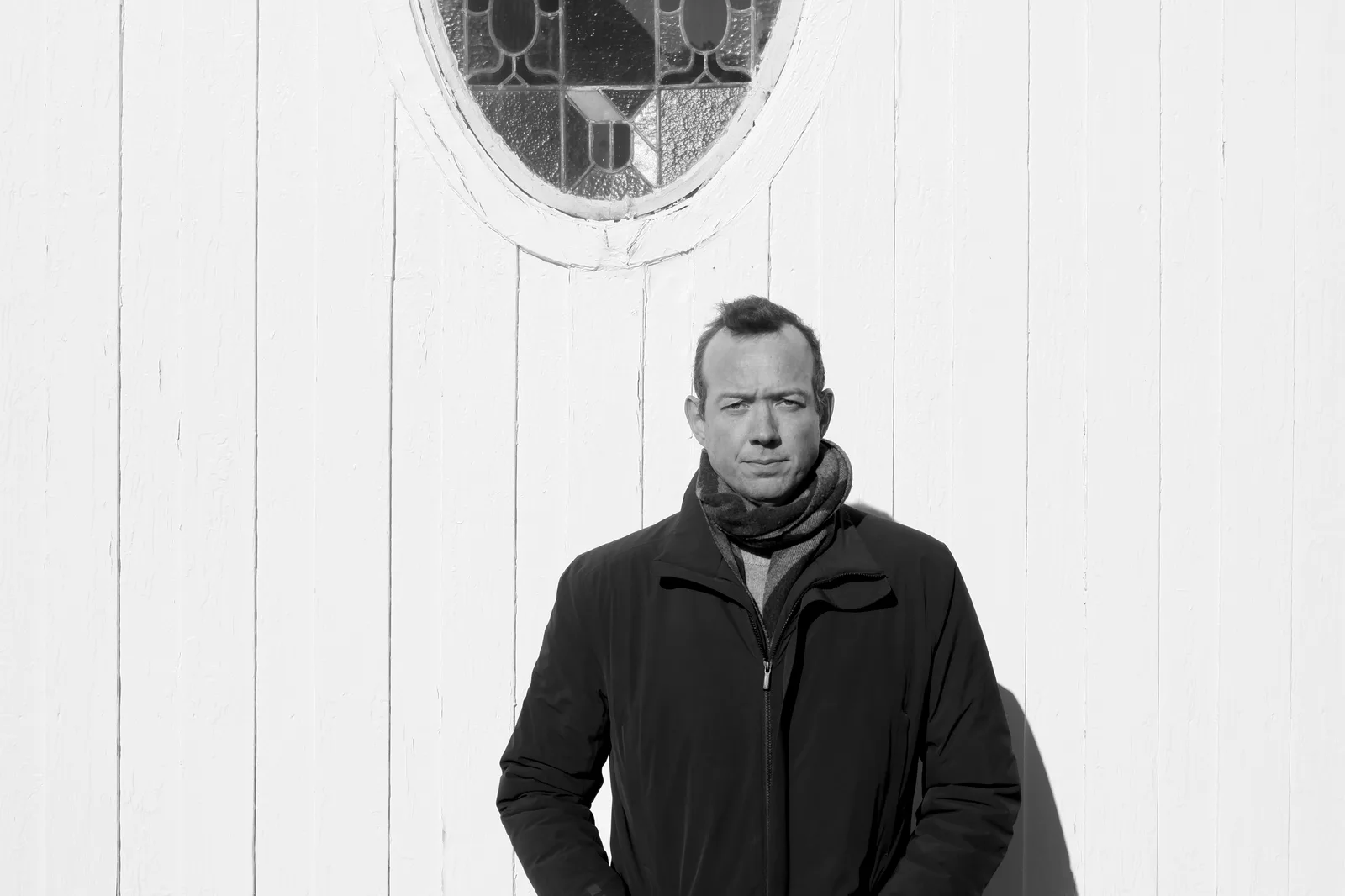
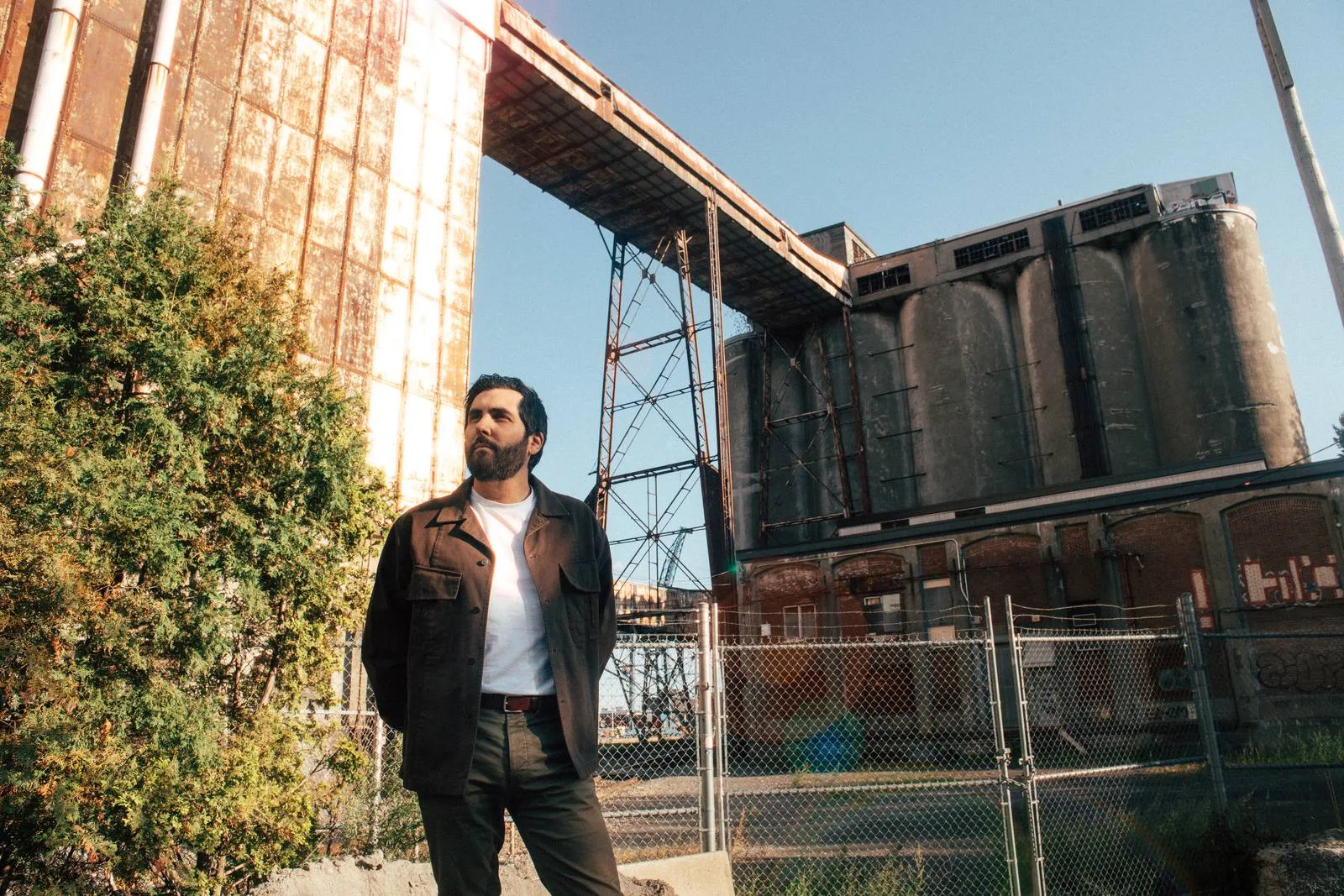
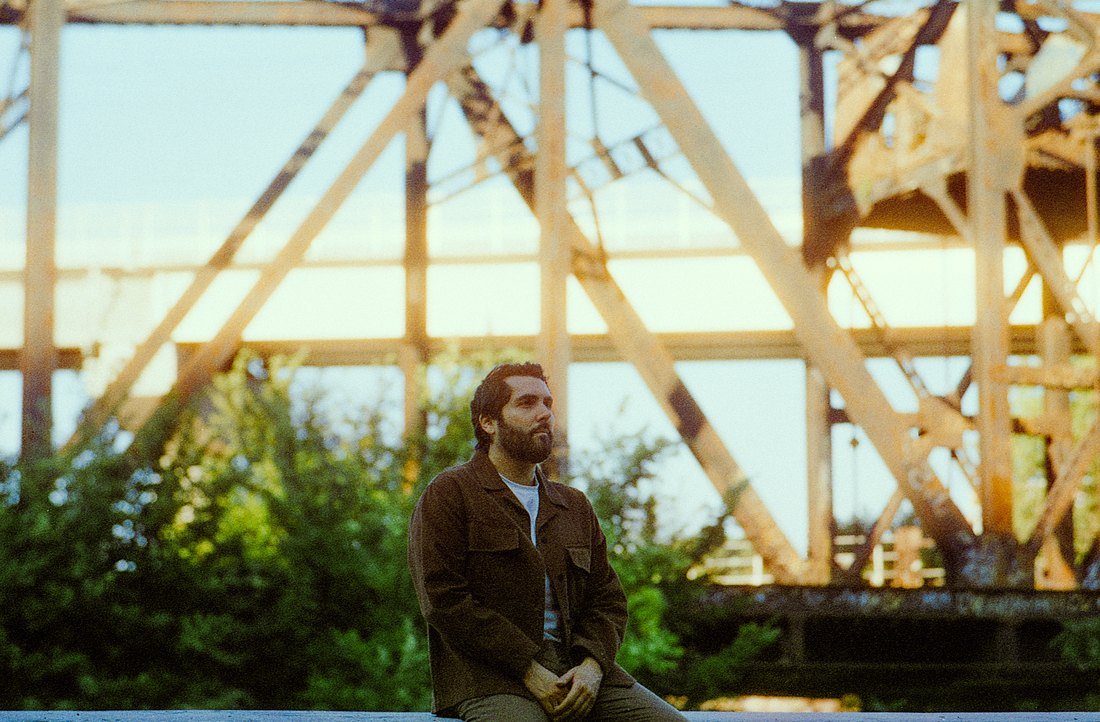
Photographs: Josh Kirschner.
Continue reading
- Tommy Emmanuel: the band between his ears — another guitarist on keeping the risk alive rather than playing it safe.
- Peter Gregson: the cello, and keeping the art of listening alive — on what a single instrument can be made to hold.
- The album as one sustained argument — why a record can be more than the tracks on it.