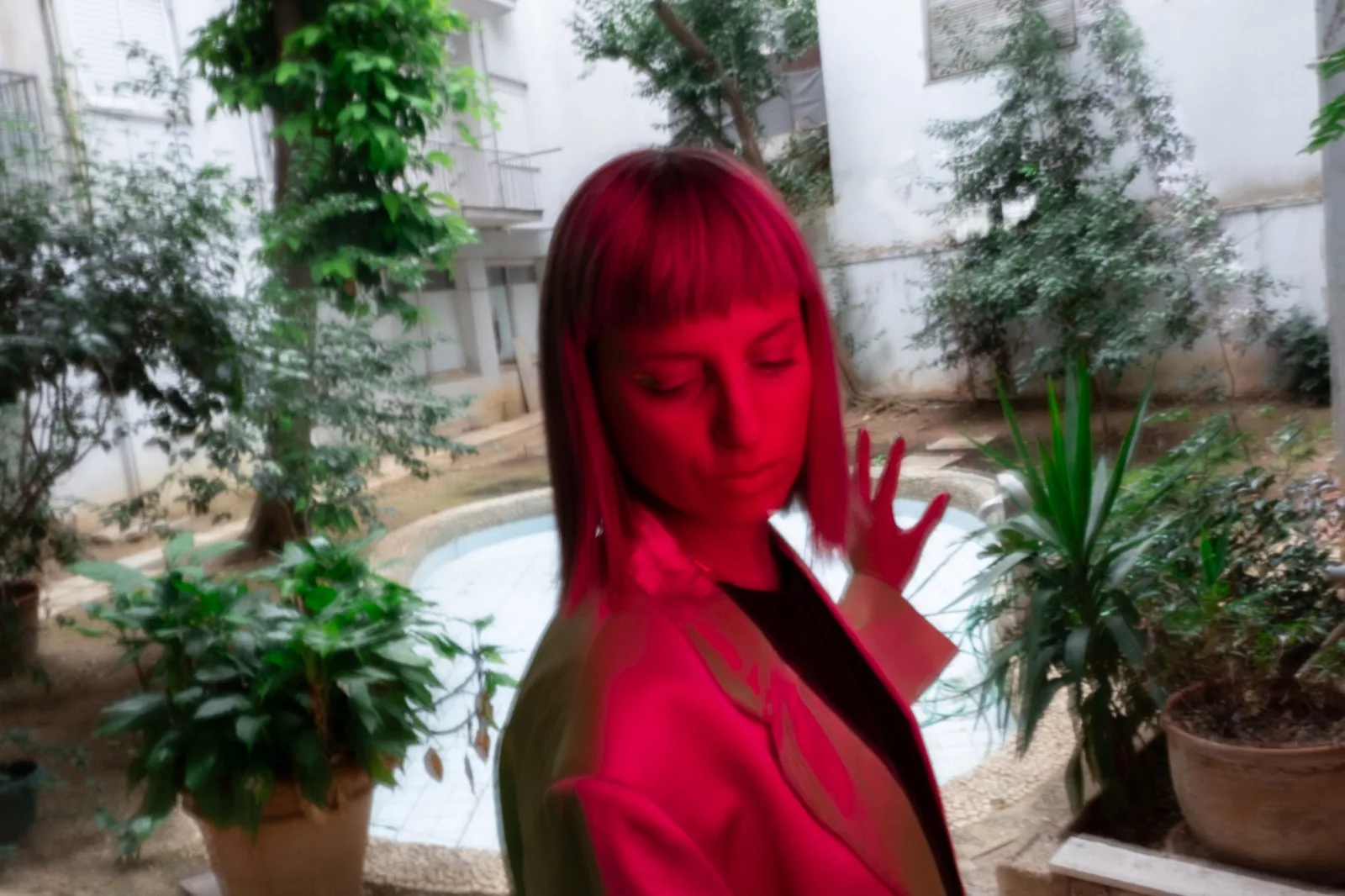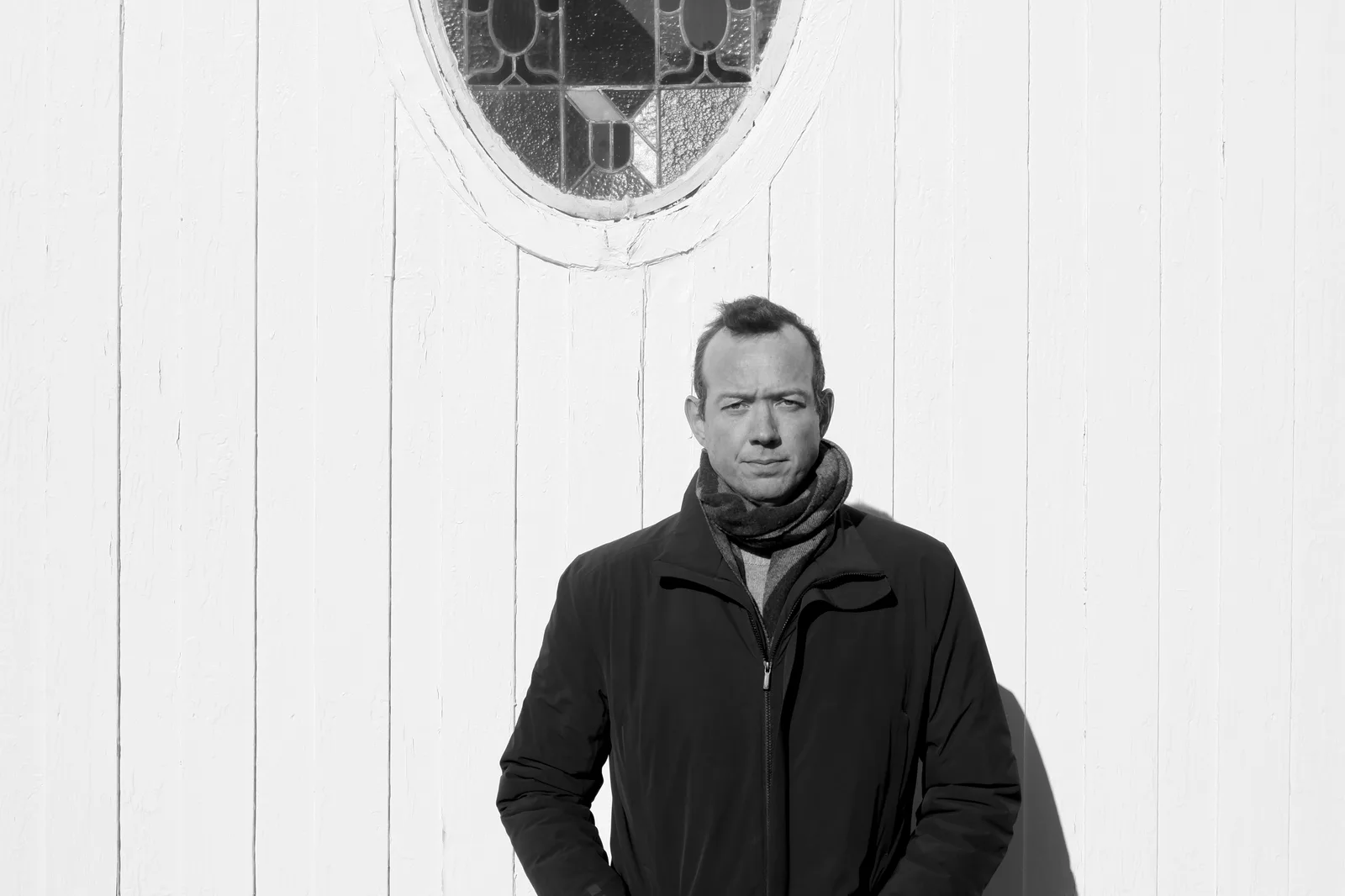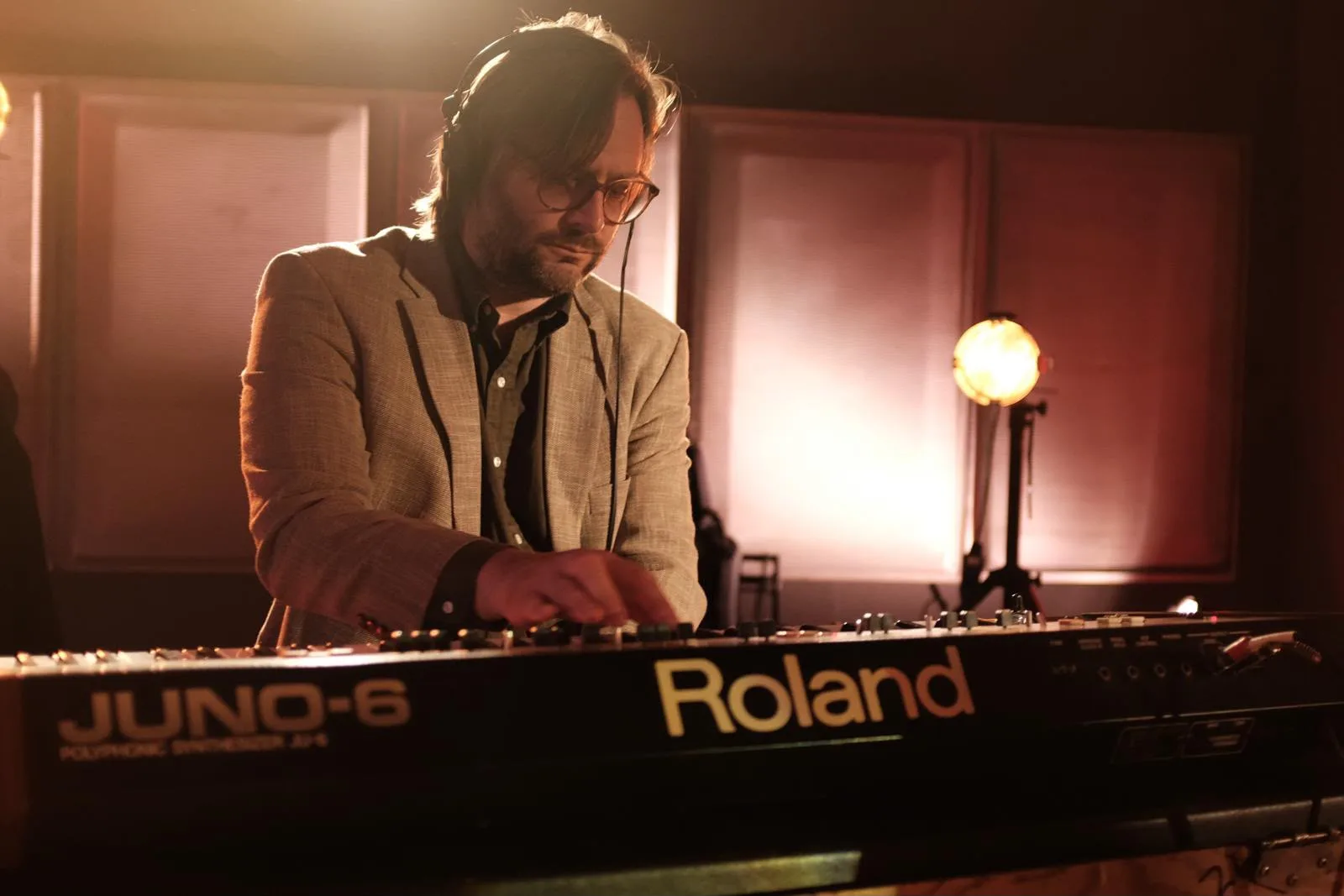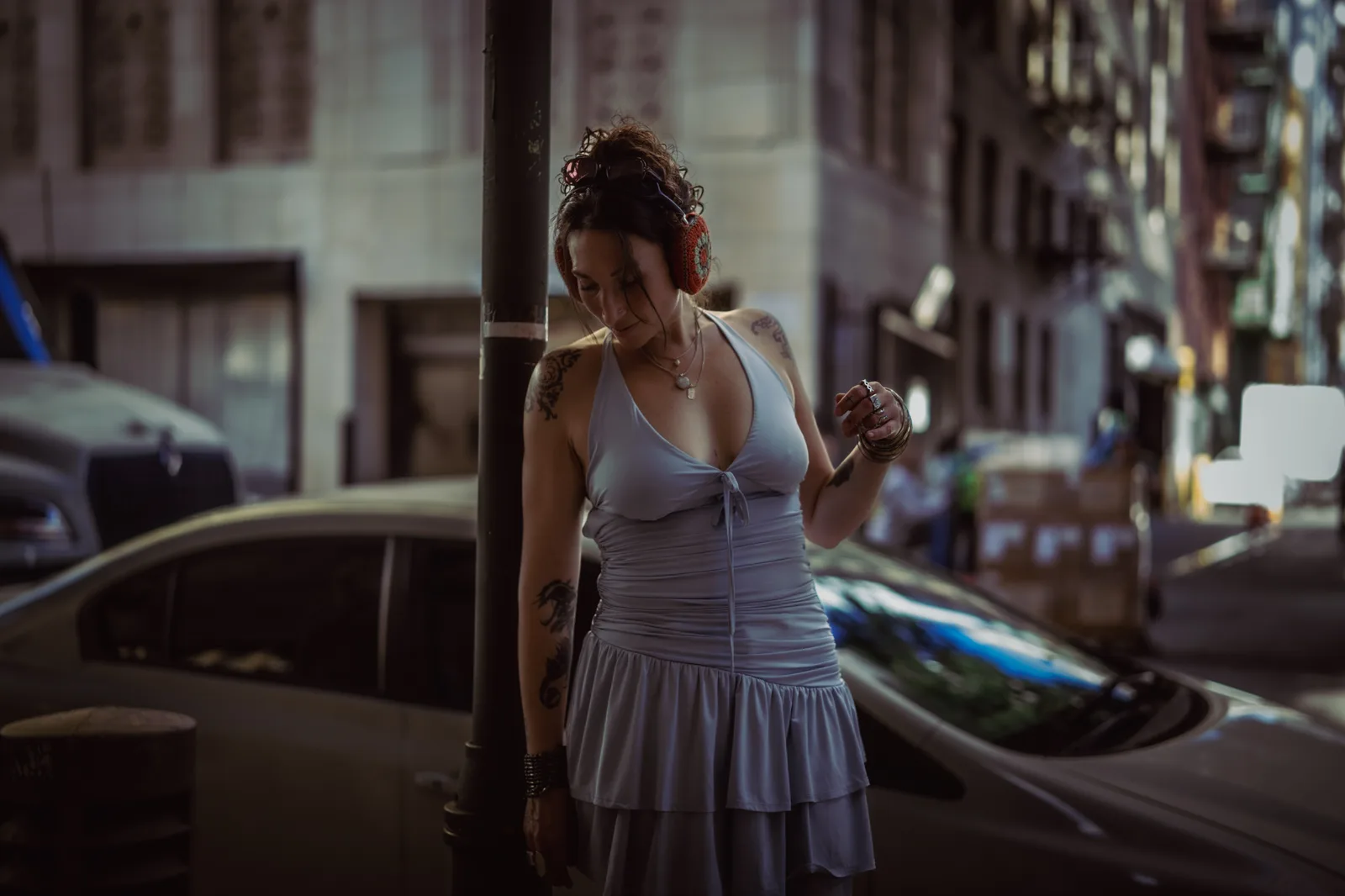
SALOMEA is a band, and it is also a name. The name belongs to Rebekka Salomea — singer, composer, lyricist and instrumentalist — who wrote her first songs in 2013, tried them out with the keyboardist Yannis Anft, and founded the group a year later. With Oliver Lutz on bass and Leif Berger on drums, SALOMEA is a quartet, and its own account of itself does not begin with a style. It begins with a household: “a chosen family, shaped by years of living and surviving together”.
In April 2026 the Deutscher Jazzpreis named her Künstler:in des Jahres — an award given to one person, by name, inside a group that describes itself as a family. The band’s new album is called axxxis.
Her answers were written in English. They are short where a short answer is the honest one, and they keep returning to the same few things: a trust that makes mistakes affordable, a voice she once had to fight to have heard in her own band, and the difference between feeling something and remembering how it felt.
No wrong or right
SALOMEA’s own biography says the sound was shaped by years of living and surviving together — love and breakups, loss and recovery, touring, laughter and tears. What can four people who have been through all that play together that four excellent hired musicians could not?
I love this question! There’s no fear of judgement, no wrong or right. It’s just play, try, experiment, make mistakes, take different routes, re-arrange, fail, try again. We trust each other blindly, we know each other and still manage to surprise each other. There’s space for reinvention and humor. We created our language together and even though we know each other so well, we still manage to inspire each other.
We created our language together and even though we know each other so well, we still manage to inspire each other.
We try everything
You have said your bandmates are among your closest friends and that SALOMEA is a family. Family is also the hardest place to say a flat no. When Yannis, Oliver or Leif brings in an idea that is not working, how does it get refused?
Our rule is: we try everything, every idea. And if someone’s not comfortable, everyone will notice. We give it a try, more than one, but if it doesn’t seem to work we’ll talk it through and see what we can adjust. If it’s an idea I’m not happy with I might explain a little but at the end of the day it’s my name up there and it needs to feel authentic and comfortable to me — so there’s no need to say much more.
What can I say now
Yannis Anft was there for the first songs in 2013, a year before SALOMEA existed. After more than a decade of playing together, what do you no longer have to say to him out loud?
Honestly it’s more like: what can I say now that I wasn’t able to say yet back then. I’ve grown a lot, all of us have. I’ve found a solid amount of confidence — in my own taste, my sound, my producing and piano skills. I make sure my voice and the lyrics are heard during concerts and there’s no frequencies competing with mine — that used to be something I would have to fight for.
Art that asks questions
axxxis is described to me as a record about accepting contradictions and not always reaching for clear answers. Most music resolves, because resolving is satisfying. What has to be true of a piece for a listener to stay inside the unresolved thing rather than quietly settling it for themselves?
I think not everyone is looking for satisfaction in music or art in general. Art that asks questions can be just as valid and sometimes really necessary. I love this quote by César A. Cruz: “Art should comfort the disturbed and disturb the comfortable”. I 100% agree.
More than just sound
You sing in a band where Yannis Anft has a synthesiser and Oliver Lutz a bass synthesiser, and you are credited as an instrumentalist yourself. Electronics can now imitate almost everything a voice does. In SALOMEA’s music, what is left that only a human voice can do?
Emotion. Experience. Words. Stories. The human voice is more than just sound. It’s an entire universe of truth and depth and layers and in-betweens or even make-believe. Most of the vocal takes on the record are some of the first versions I recorded. When trying to re-do the vocals I realized again that it’s really a vibe-thing that is very, very hard to imitate. Of course you can method act yourself back into that state of mind. But often times nothing beats the actual moment, when you were really feeling it and not just remembering the feeling. It’s a specific nuance the listener can feel — or at least I can feel it when I listen back.
Nothing beats the actual moment, when you were really feeling it and not just remembering the feeling.
Their own story within the story
You write the words as well as the music. In writing as rhythmically dense as SALOMEA’s, a lyric has to survive being heard once, at speed, over a groove. How much of what a line means is carried by what it says, and how much by how it sounds in the mouth?
These days I do repeat words and the lyrics are meant to work as mantras, here and there. But yes, I’ve gone through phases in which the collage-ness of a lyric was just as important as the meaning, maybe even more important. I want people to be able to find their own story within the story I’m telling, if that makes sense.
Copenhagen was confrontational
You studied jazz in Cologne and then at the Rytmisk Musikkonservatorium in Copenhagen. Those are two quite different ideas of what a musician is for. What did Copenhagen teach you that Cologne could not?
Copenhagen was confrontational. Arriving at this very international school, knowing basically no one — was like a re-start after many years of having built something in Cologne. There’s a specific class called KUA — all students from a year gather in a class room and each person shares the current state of something they’re working on. Unfinished, raw, rough material and ideas. They use a specific method for giving and asking for feedback. Very precise and aware. One day I asked about references people had when listening to my new song. One answer was: all the old Jazz Divas (referring to my voice). This shocked me and completely changed the way I thought about singing and interpretation and imitation and references.
Telling the story
You have taught jazz and pop vocals in Cologne since 2020. Teaching forces you to put into words things that had been pure instinct. What has a student’s question made you explain to yourself for the first time?
Most questions about interpreting a song. Telling the story. I think this is something that I really understood with age and with unraveling the stories the students were trying to tell. At this time I don’t teach at the conservatory anymore, though.
The matriarch of this family
The Deutscher Jazzpreis named you Künstler:in des Jahres in April, by name, while SALOMEA is the thing you describe as a family. An individual award lands inside a collective. What did you have to be careful about in the days afterwards?
I am an artist in my own right, I have sung in many different constellations, I co-founded other bands and projects, I create the worlds around the SALOMEA releases, I finish everything up, I organize the funding, I find the collaborators, I do the research, etc. etc. And still: I made it very clear to the band that the money from the award is going straight back into the release and tour of “axxxis”. My band was extremely supportive and assured me that I deserved this award. And they mean that. I am the matriarch of this family and I accept this award now, even though in the beginning it was hard for me.
I am the matriarch of this family and I accept this award now, even though in the beginning it was hard for me.
It’s up to you, really
A song called “stick around” is asking something of the listener in its title before a note is played. Was that an instruction to a person, to yourself, or to the music?
It’s up to you, really. Not rarely does a song change its meaning over time. It started out as an invitation towards a specific person. But I know it will develop over time, like most of my songs do. It pays homage to long term relationships, commitment, loyalty. Not in the mainstream or necessarily monogamous way but in a purely emotional way.
Stage SALOMEA
SALOMEA is your own name, and it has been the band’s name since 2014. Does the person who walks on stage as SALOMEA do things Rebekka would not?
Stage SALOMEA is a lot more confident than non-stage SALOMEA. She has no issue with the fact that she is taking up space, that she is saying all the things, speaking her truth, asking people to listen more than they say. Off stage I’m usually more of the listener, observer and don’t say a lot if I’m not asked. I usually do the asking.
Listen
The song asked about above: “stick around”.
Where she would like readers sent: salomeaofficial.com.
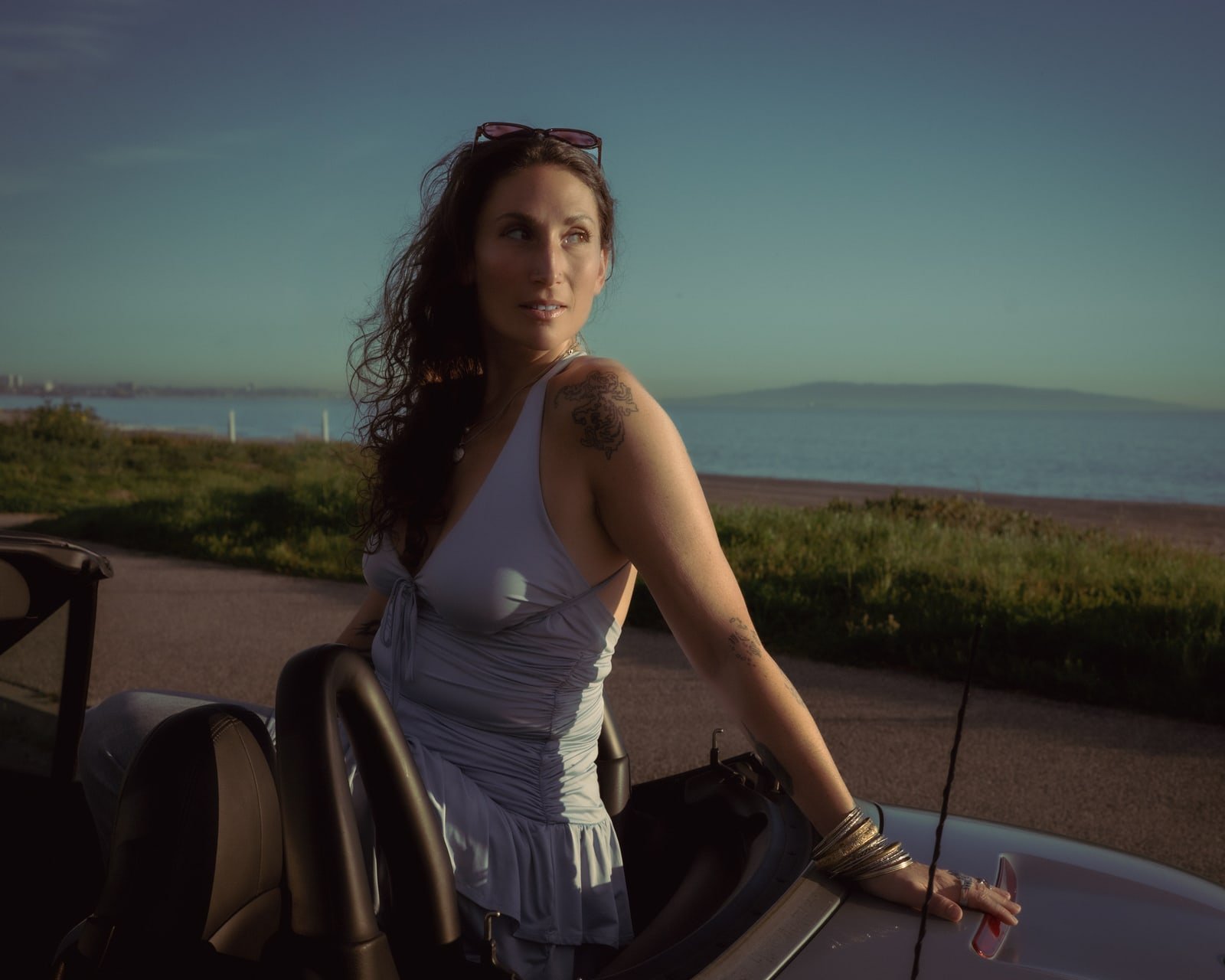
Photographs: Rawaa.
Continue reading
- The grain of the voice: Barthes in the age of Auto-Tune — on what a voice carries that is not the words.
- Jazz as an open method — improvisation, individuality, the room — genre as a way of working rather than a shelf.
- Maria Chiara Argirò: a sound rather than a genre — another singer and producer on letting her own voice forward.