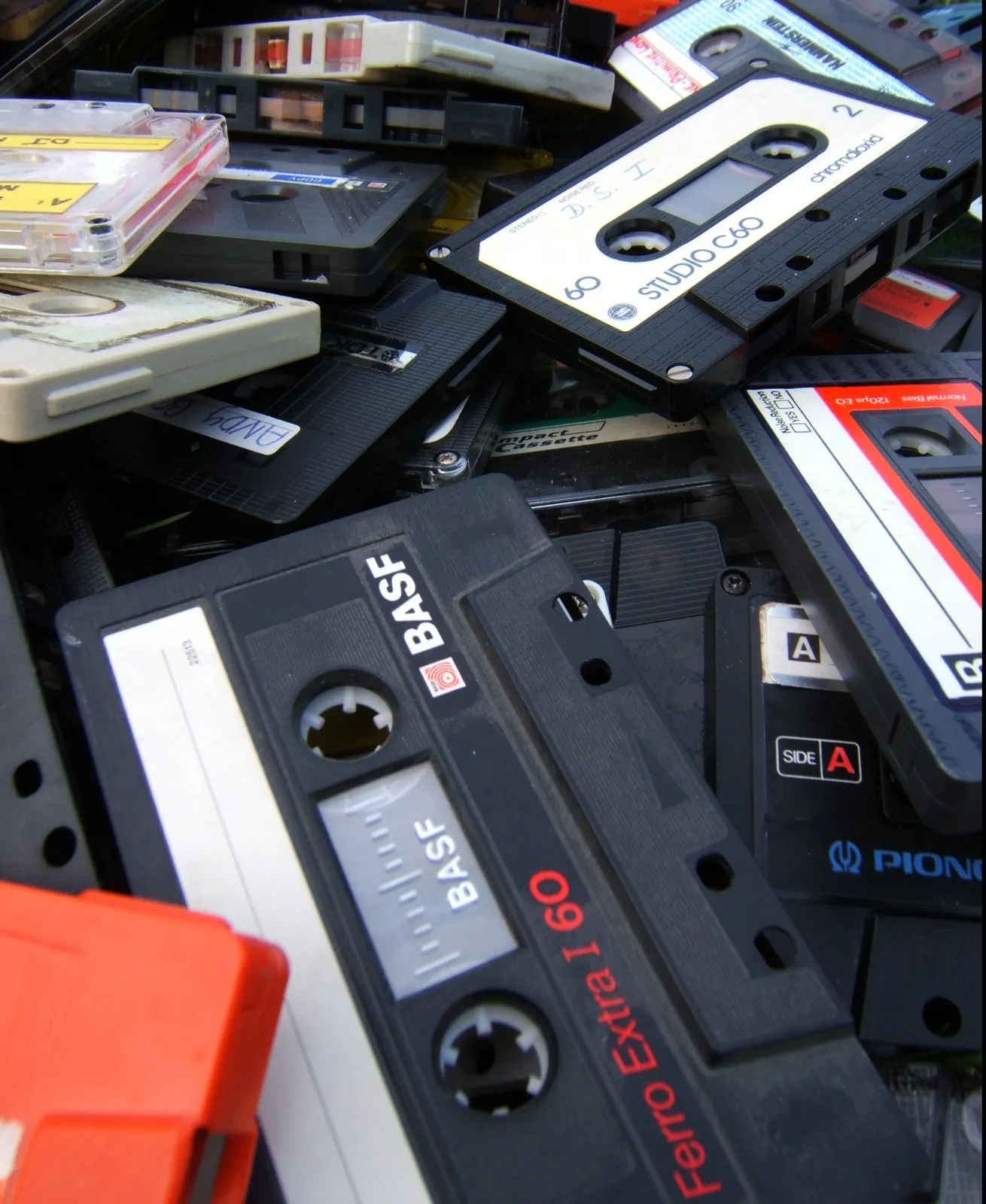
In 1969 a tape operator named John Kurlander was told to delete a twenty-three-second Paul McCartney throwaway, “Her Majesty”, from the Abbey Road medley. He had also been told, by long-standing studio rule, never to throw anything away — so he picked the offcut off the floor, spliced about twenty seconds of red leader tape in front of it, and stuck it on the end of the reel. McCartney heard the accident, kept it, and the album acquired its famous closing silence and coda. The whole meaning of a record can hinge on where, physically, a song lands on a strip of tape. That is the claim this essay defends: an album is not a folder of files but a sentence, and sequence is its syntax.
Sequence is the syntax
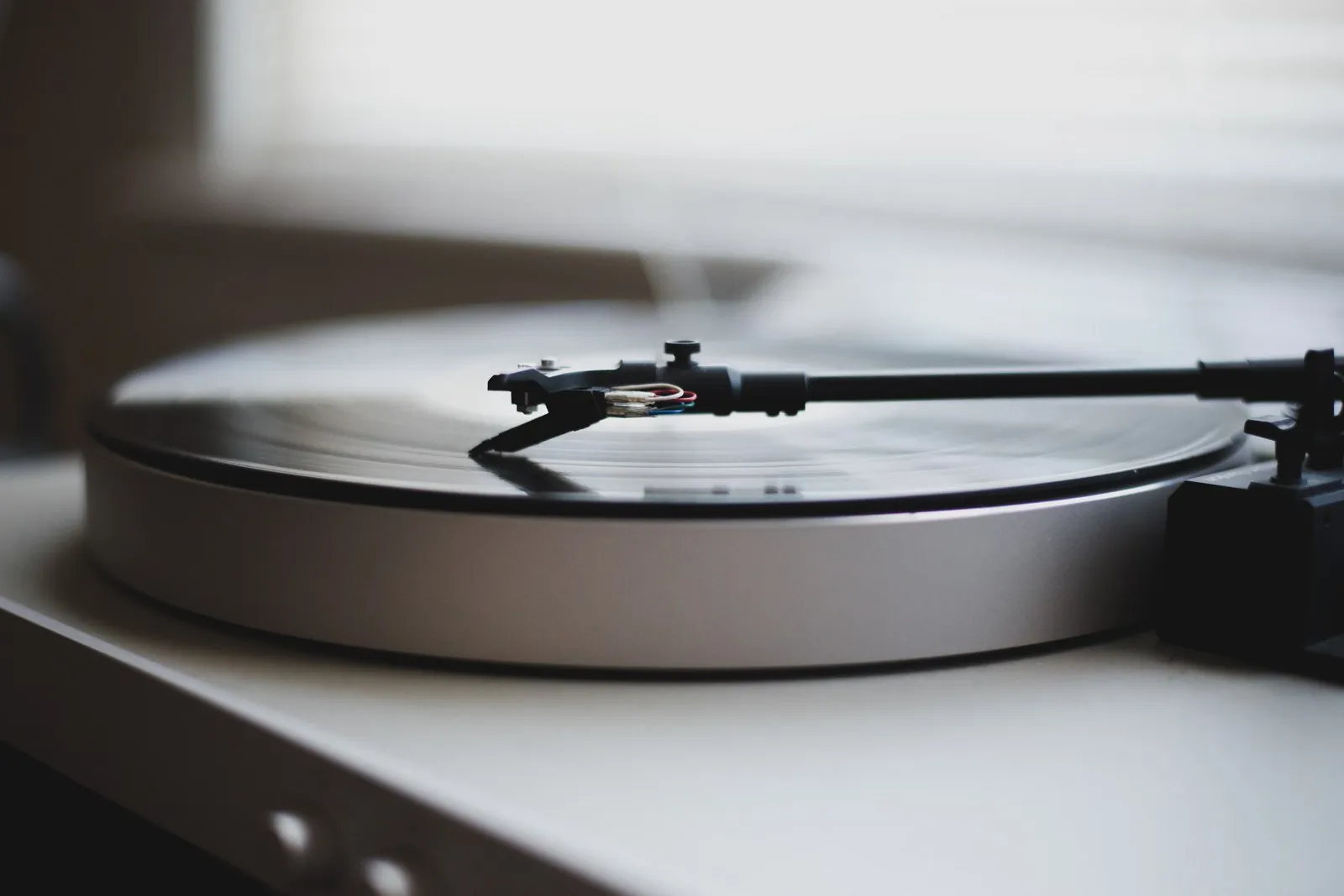
Treat the running order as grammar and the examples multiply. Springsteen built Born to Run on what he called a “four corners” design: the two side-openers, “Thunder Road” and “Born to Run”, are escape anthems, while the two side-closers, “Backstreets” and “Jungleland”, are the emotional reckonings — and “Backstreets” was moved, days into sequencing, from the album’s end to the close of side one, so the arc would balance. Marvin Gaye’s What’s Going On (1971) stripped out the silent gaps between songs so the record segues uninterrupted, a single suite narrated by a veteran coming home. Even the physical object enforces meaning: a vinyl side holds only about eighteen to twenty minutes, the most dynamic tracks sound best at the outer edge where the groove has room, and the side-break forces a literal pause — you get up, you flip the record — that becomes a structural rest in the argument.
The argument, withheld until the last track
The strongest proof that order is meaning is the record that refuses to give itself up until the end. Kendrick Lamar’s To Pimp a Butterfly (2015) builds a single poem in fragments across the spoken interludes of its tracks; only in the closer, “Mortal Man”, is the poem finally read in full — and then read aloud to Tupac Shakur, in an imagined interview spliced from a real 1994 radio recording. Shuffle the album and the poem never assembles; the meaning is in the sequence or it is nowhere. Beyoncé’s Lemonade (2016) does something similar with feeling rather than text, moving through titled chapters — Denial, Anger, Apathy, Emptiness, Accountability, Forgiveness, Resurrection, Redemption — so that the running order is the narrative of betrayal and repair. These are not collections of singles. They are arguments that depend, like any argument, on what comes first and what comes last.
The form that refuses to die
By every logic of the streaming economy this form should be finished — and instead it is being defended, loudly, by the people with the most to gain from the alternative. In November 2021 Spotify made play, not shuffle, the default on every album, at Adele’s request; she had argued, “We don’t create albums with so much care and thought into our track listing for no reason. Our art tells a story and our stories should be listened to as we intended.” Spotify simply replied, “Anything for you,” and re-engineered a global default. Beyoncé’s overnight, full-package “visual album” in 2013 made the album an event again — and its impact helped push the industry’s global release day from Tuesday to Friday. Billie Eilish built Hit Me Hard and Soft (2024) as a continuous body of work, its suite “Bittersuite” bleeding directly into the closer, and threw arena-sized listening parties so fans would hear it in order; she compared the record to a family and said she did not want “one little kid in the middle of the room alone”. And the object itself is booming: US vinyl revenue hit $1.4 billion in 2024, its eighteenth straight year of growth and the highest since 1984, outselling CDs for the third year running; in the UK, vinyl reached a roughly thirty-year high, led by new releases rather than catalogue.
An album is the one format you cannot reshuffle without demolishing it.
The building, admired but unentered
Here the honest counter-argument has to be let in, because the revival is shakier than the headline. If the album as sustained statement were truly returning, why does roughly three-quarters of all songs draw five per cent or less of their own album’s streams, while the share captured by a record’s single best-known track has nearly doubled since the 1960s? Audiences increasingly graze the hit and skip the sequence. And the vinyl boom — the supposed proof of renewed reverence — is substantially a collecting economy rather than a listening one: a University of Glasgow study found 57 per cent of Taylor Swift fans owned multiple copies of the same album while 87 per cent mainly streamed it, and roughly half of vinyl buyers do not own a turntable. Even Billie Eilish has called the multi-variant arms race “so wasteful”. The form, in other words, may be venerated as a totem precisely as it is abandoned as a sequence — the building admired, the rooms never entered.
That contradiction is the real subject. An album’s meaning is load-bearing, like a building’s: the opener is the foundation, the side-break a structural seam, the closer the keystone. Streaming dissolves the load by letting any track stand alone, which is exactly why the form’s defenders fight over defaults and segues and running orders rather than over mood. “Her Majesty” works only where Kurlander’s splice left it; To Pimp a Butterfly’s poem completes only at the end; rearrange the rooms and you have a different house. The album endures, when it endures, for the one reason a playlist can never claim: its order is its meaning, and it cannot be reshuffled without being torn down.
Sources
- The “Her Majesty” splice and the Abbey Road medley (with Kurlander’s account) — Ultimate Classic Rock.
- Born to Run — the “four corners” sequencing and the late move of “Backstreets” — Wikipedia.
- What’s Going On (Marvin Gaye, 1971) — gapless song-cycle — Wikipedia.
- To Pimp a Butterfly — the poem completed in “Mortal Man” / the Tupac interview — Everything Is Noise; Lemonade chapters — Wikipedia.
- Adele and Spotify’s default-to-play change — Variety; Beyoncé (2013) and the Friday release-day shift — Wikipedia; Hit Me Hard and Soft — Wikipedia.
- US vinyl in 2024 — RIAA 2024 Year-End Report; UK vinyl — Music Ally / BPI.
- Stream-concentration data (best-track share; ~75% of songs ≤5%) — StatSignificant; vinyl-as-collectible (the Glasgow study; variants) — Variety; Eilish on waste — Billboard.
- Vinyl sequencing constraints (side length, groove, the flip) — Performer.
- Hero photo: “Minimal vinyl player” by Lee Campbell, via Wikimedia Commons, CC0 (public-domain dedication). Resized for web display.
Continue reading
- Against the algorithm: discovering music slowly — the same argument turned toward how we find records, not only how we play them.
- Silence in music: the pause is not emptiness — why the gap between songs, and the side-break, are structural.
- On re-listening: how a song becomes yours — what repeated, in-order listening does that the skip cannot.