A saxophone gives you one note at a time. So, for all practical purposes, does a double bass. Put the two together and you have an ensemble that cannot state a chord — not once, not anywhere. And yet the first Vega Trails record is unmistakably harmonic music. Something is holding it up.
That absence is the reason we wanted this conversation. Most writing about the duo reaches for the room instead: the London church, the reverb, the calm. The more interesting question is structural. If no one plays a chord, where does the harmony actually happen — between the two lines as they cross, in the building, or in the listener’s head?
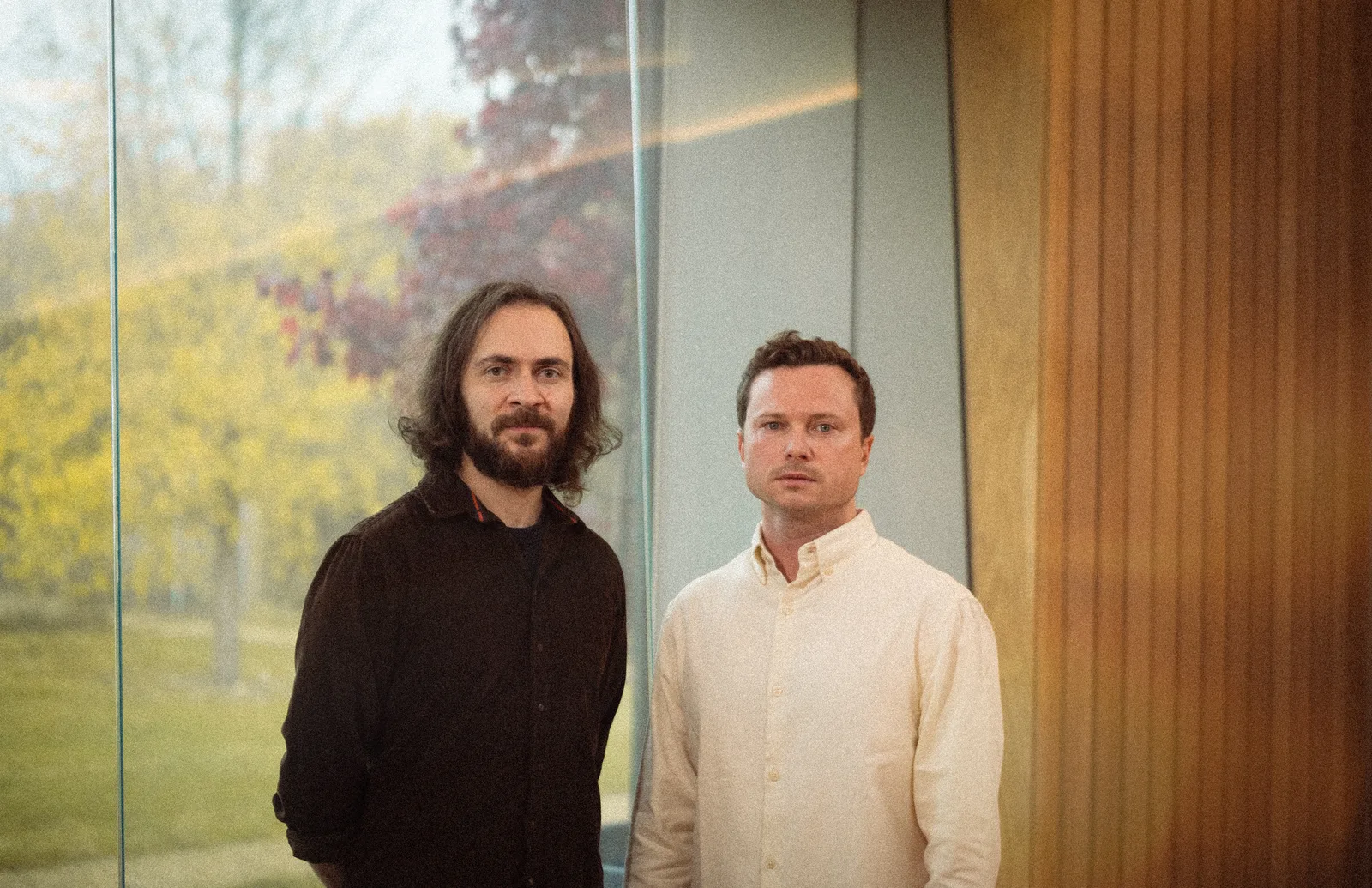
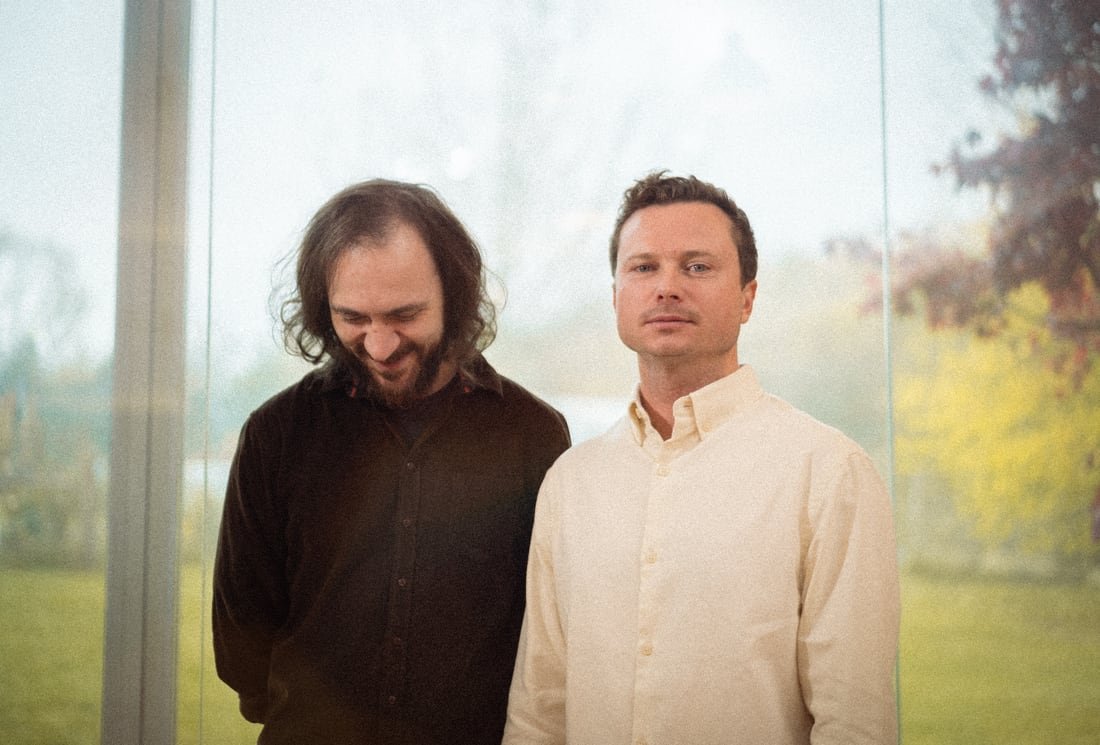
Milo Fitzpatrick writes the music and plays the double bass; Jordan Smart plays tenor and soprano saxophone, bass clarinet and the ney. Neither is new to this. Fitzpatrick has spent much of his working life inside Portico Quartet, a band whose records are dense and layered — very nearly the opposite discipline. Vega Trails is what happens when a musician with that history decides to see how little he can use.
We sent them written questions and asked them to answer in their own time. What follows is that exchange. Milo answered the first group; Jordan, who has been asked about this music remarkably little, took the last two.
A note on one question: we put it to Milo that a piece on the second record was a survivor from the first record’s sessions. It was not — he told us it had been written for the second — and rather than print a question with a mistake inside it we have taken it out. The error was ours.
Where the harmony lives
Let me start with the thing that seems to me the real subject, and that a reader needs no jazz at all to grasp. You’ve said it plainly: “neither instrument is really capable of harmony.” A saxophone gives one note at a time; so, essentially, does a double bass. So on that first record there is no chord anywhere — and yet the music is clearly harmonic. Where does the harmony actually live? Is it implied by the two lines crossing, is it handed to the building, or is it finished in the listener’s head? And can you get a minor chord to happen without anyone playing one?
I think harmony always exists in any type of “tonal” music. A cappella singing in early music and from many folk traditions is always rooted in some sort of basic harmonic structure or centre. And then to the other end of the spectrum you have Bach’s solo cello suites, for example, which use a much more complex harmony, but again never using any harmonic instrument. Both of these linear methods are a way of “spelling” out the harmony in a more protracted form, rather than playing a chord and routing a melody all together. So in this way the listener is always leaning into the next note in a kind of suspension, to see where the harmony leads as the melodic story unfolds.
So to answer your question in short, the harmony is determined by the scales we play and how the counterpoint between the two parts interrelate.
The listener is always leaning into the next note in a kind of suspension, to see where the harmony leads as the melodic story unfolds.
Without a grid
The other absence is time. No drums and no click meant, in your words, that you could “speed up and slow down, hold pauses and just generally flow more organically… It felt more like being the wind or water.” Most recorded music in the world is nailed to a grid. What does a listener actually feel when the pulse is allowed to breathe — and is there a passage on the record where the two of you disagreed about where the beat had got to, and you kept it?
Many forms of music outside the popular music hemisphere exist without being in a grid. This allows you to play with phrases and to play with pauses between phrases to create a more emotive effect and tension/release. It also builds in more unpredictability. Some music, where it’s based on rhythm or “groove”, relies on a strict tempo to fulfil its function, like in a dance context for example. But I think where melody is the main centre of the genre, like in the first record, having more freedom with tempo allows the melody to use an extra dimension to help tell its story.
The record that was meant to be bigger
Something you said last year rearranges the whole story people tell about this project: “Tremors in the Static was supposed to be much more epic, but because of Covid restrictions I had to keep the players to a minimum.” So the stripped-back sound the record is known for began as a constraint rather than a choice. Do you now think it served the music better than your original plan would have? Is there a version of that record still in your head — the big one you meant to make — that bothers you?
It doesn’t bother me. The way a record turns out is the way it turns out. I think for most artists’ records the inception is never quite the same as its final form. Furthermore, the way an audience receives the work, again, might not be how the artist intends. But this is all a part of the process; to have surprises and to be open to the unknown is a healthy working practice in the process of making a record. I had intended for fuller arrangements for the first record, but it ended up being a sparse duo sound, and the album is now known for that unique sound and that’s how it is.
What the piano freed
On Sierra Tracks you brought in a pianist, in your words, to give “some rhythmic movement behind us, to free up the bass and sax from being so busy”. That is a precise description of how much two instruments were having to cover. Could you hear that at the time, or only once the piano was there? What did the two of you stop having to do, the moment someone else was holding the middle?
I had played with the piano over the top of early recordings of just sax and bass and heard it was a natural voice which complemented the other parts. The timbre of the instrument, being tuned percussion, sat nicely in between wind and string. Another reason was that the piano can hold notes which die with the sustain pedal, and this actually allowed for more space. Rather than having the bass constantly having to provide harmonic grounding, I could play just one note or chord. It basically just freed up the roles and created more space for the bass and sax.
Taking the tune back
You’ve described picking the cello back up and realising you could be more nimble and expressive with the left hand — that you could now play melodies you would formerly, as you put it, have delegated to Jordan. A bassist taking the tune back from the saxophonist is a small revolution inside a band. What did you find you phrase differently from him? And was there a melody you had already given away that you quietly reclaimed?
Some melodies just sound better on one instrument than another. Even though Jordan plays a wide variety of wind instruments, sometimes the melody is looking for a different home. So having the cello at hand meant I had another colour in the palette. It also was fun to experiment and play around with another voice on the second record, and not have melody always coming from the wind world.
How bare is bare
“Just sax, double bass and a church” is how that first record is usually described, and it is how it sounds — yet the credits also run to piano, drums, a Prophet 6, a Moog, bells, loops and samples. What interests me is that the shorthand is still true: none of it reads as addition. How much scaffolding does a bare sound need before it stops reading as bare? Was there a threshold past which one more element would have broken it — and did you cross it and come back?
I always think of a music ensemble much like that of a group of actors in a play. I often think who has the lead part, who’s telling the story, who is supporting, and how do the “extras” contextualise the narrative to give it more depth?
Even taking the metaphor of a dance ensemble can help. And so on the first record I saw it as a dance, a duet between two parts. Sometimes one leads and the other follows and vice versa. Any more characters than this in the foreground would have broken the focus and the “spell”. But it was also the limitation I set myself in the writing stage; you only have two voices and you have to tell the story just with those two.
Any more characters than this in the foreground would have broken the focus and the “spell”.
Two disciplines
Two records, opposite disciplines. The first: no click, elastic, cued by looking across a room. The second: “99% of all musical decisions had already been made” before anyone walked into the studio in Warsaw. Same composer, three years apart. Which version of you writes better music? And when everything is decided in advance, what is left for the musicians in the room to actually give you?
They were two quite different processes. I don’t know if one is better than the other. Some records we all love have been meticulously composed and others were left to be completely improvised. It’s all about the energy that it gives in the end. Both records were quite finely composed, although the first had more moments of improvisation. I learnt a lot in both approaches, about myself, my strengths, my weaknesses. And I can take these lessons which I’ve learnt and apply them for the next record going forward. You have to try new things out, go into the unknown spots and see what happens — that’s how you grow and evolve, and ultimately it’s how the whole thing remains fun and like play time.
Composing the silence
You’ve written that space is as important as sound — that “the way the sound decays, or silence eats away at the energy of sound” is what defines a sound’s shape. As a founder member of Portico Quartet you have spent much of your working life inside dense, layered records — the opposite discipline. What did you have to unlearn to write music this open? Is silence something you compose, or something you stop yourself filling?
I think the active choice to make a sound is just as important as to not make a sound. But of course, it’s more fun to actually make a sound than not! But when composing, the sound shapes the silence, and the silence shapes the sound. You need both to shape music, especially melody.
I didn’t need to unlearn anything when writing this music. But I think it was definitely an unconscious reaction to years of dense walls of sound. I was also listening to a lot more folk and classical music at the time and became very interested in the depth of just one voice.
The sound shapes the silence, and the silence shapes the sound.
Jordan Smart: the only melodic voice
In this project you are, for long stretches, the only melodic voice, with nothing underneath you that can state a chord. That must change what a saxophonist does: how you place a note, how long you hold it, whether you imply the harmony yourself or deliberately refuse to. What do you do here that you would never do in a band with a piano in it? And is playing without harmony underneath frightening, freeing, or simply a different job?
I think that in a lot of the projects I work in harmony is very important, but sometimes implied subtly, particularly in Vega Trails where we tend to build it between us, and often Milo is implying through an ostinato phrase, or a pedal point against which melody or other voices within chords can shift and move. This creates movement in other ways and leaves room for compositional and melodic expression in less “traditional” forms.
The two instruments, double bass and saxophone, have so much texture and tone possible between them that sometimes very little musical information is needed to express what we wish to, and then it creates an even greater impact when denser parts are used.
I have actually just released my first solo record, Above The Street, and in that I am exploring this area of less harmony even further, so at the moment it feels that it has great depths for me to try and express myself within and explore.
Which voice the piece wants
You move between tenor and soprano saxophone, bass clarinet and the ney. When a piece of Milo’s arrives, how do you decide which voice it wants — is it a matter of range, of breath, of the character of the reed, or of something you’d struggle to put into words? And how different is it to play music that has been written for you with your phrasing in mind, compared with music you have made from the ground up with other people?
Sometimes it is technical aspects that can shape the final decision, as you say, range often being a big one, but we always discuss and often intuitively know which voice we’d ideally like to hear an idea on. They each have such specific characters and tonal options that often the idea asks for one implicitly, or if not, we try several and often know fairly immediately. One will “speak” more than the others.
As for phrasing, Milo often sends me ideas with the melodies played on keyboard, so they are very bare and skeletal, and I think this allows me to work into them and try and bring more phrasing and expression in, and often this process continues as we start playing tracks live: we discuss a lot how we felt a song went and how we can improve on it in future as the song gains a life of its own.
Often the idea asks for one implicitly, or if not, we try several and often know fairly immediately. One will “speak” more than the others.
Listen
Official site: vegatrails.com
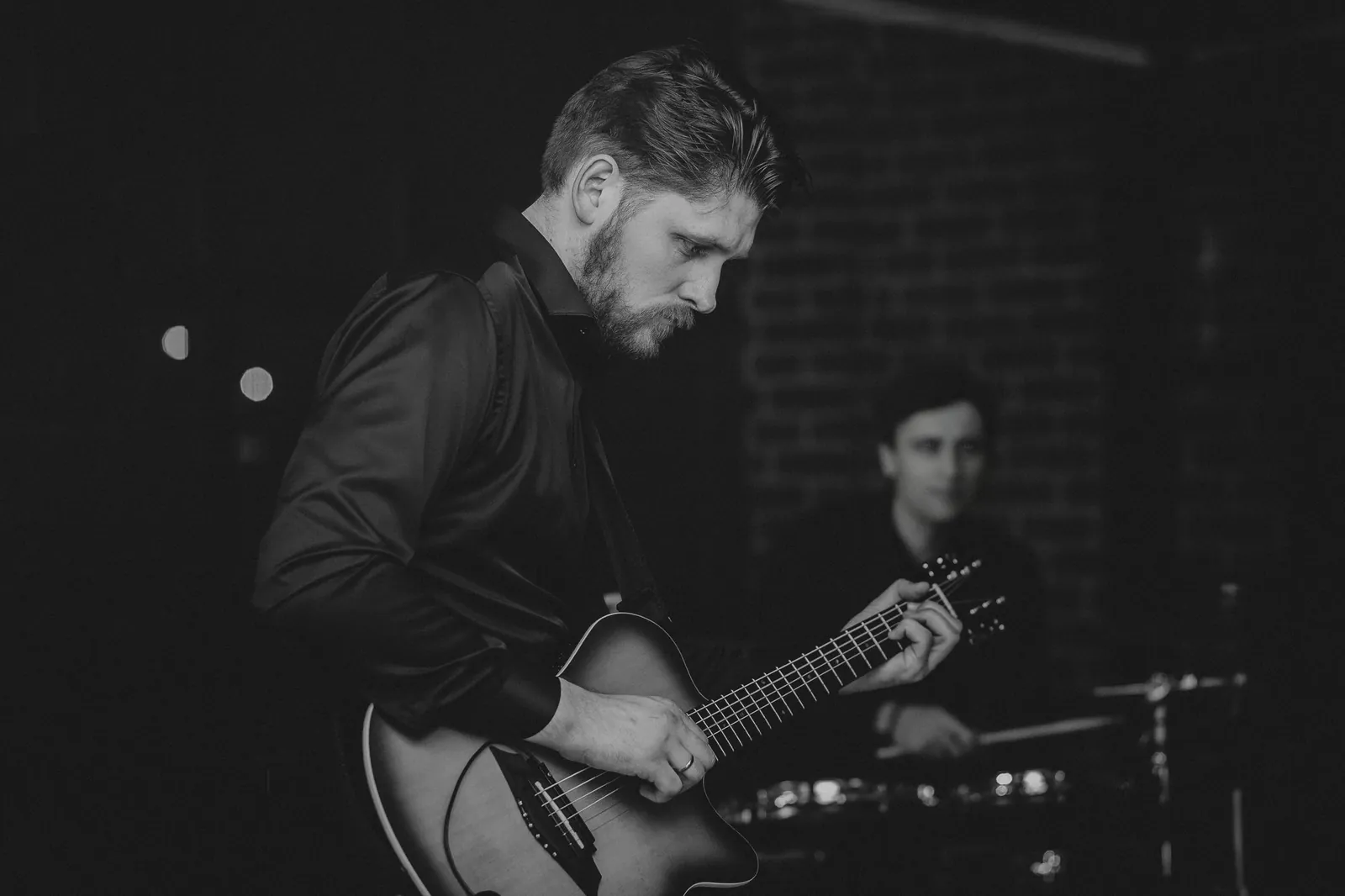
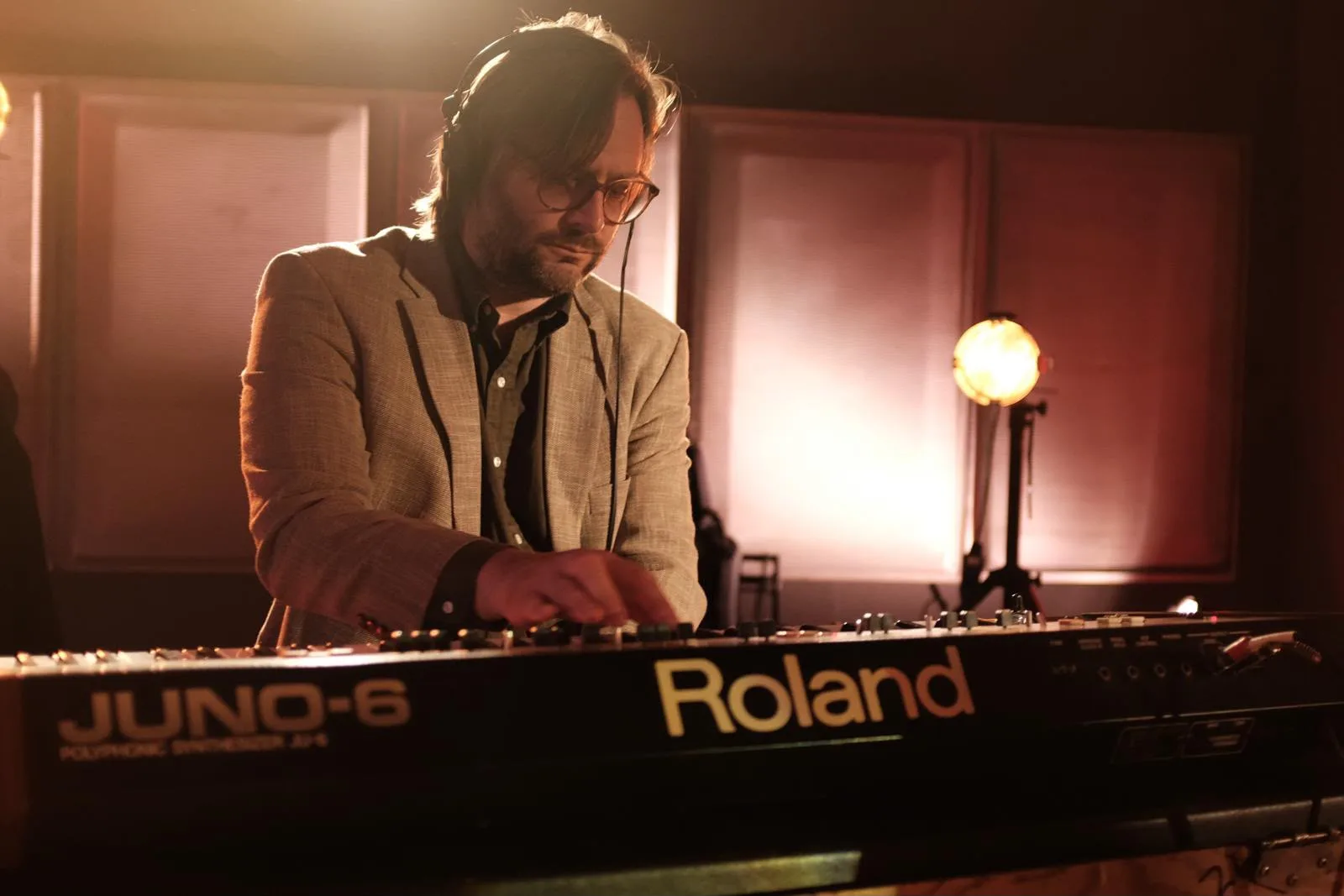
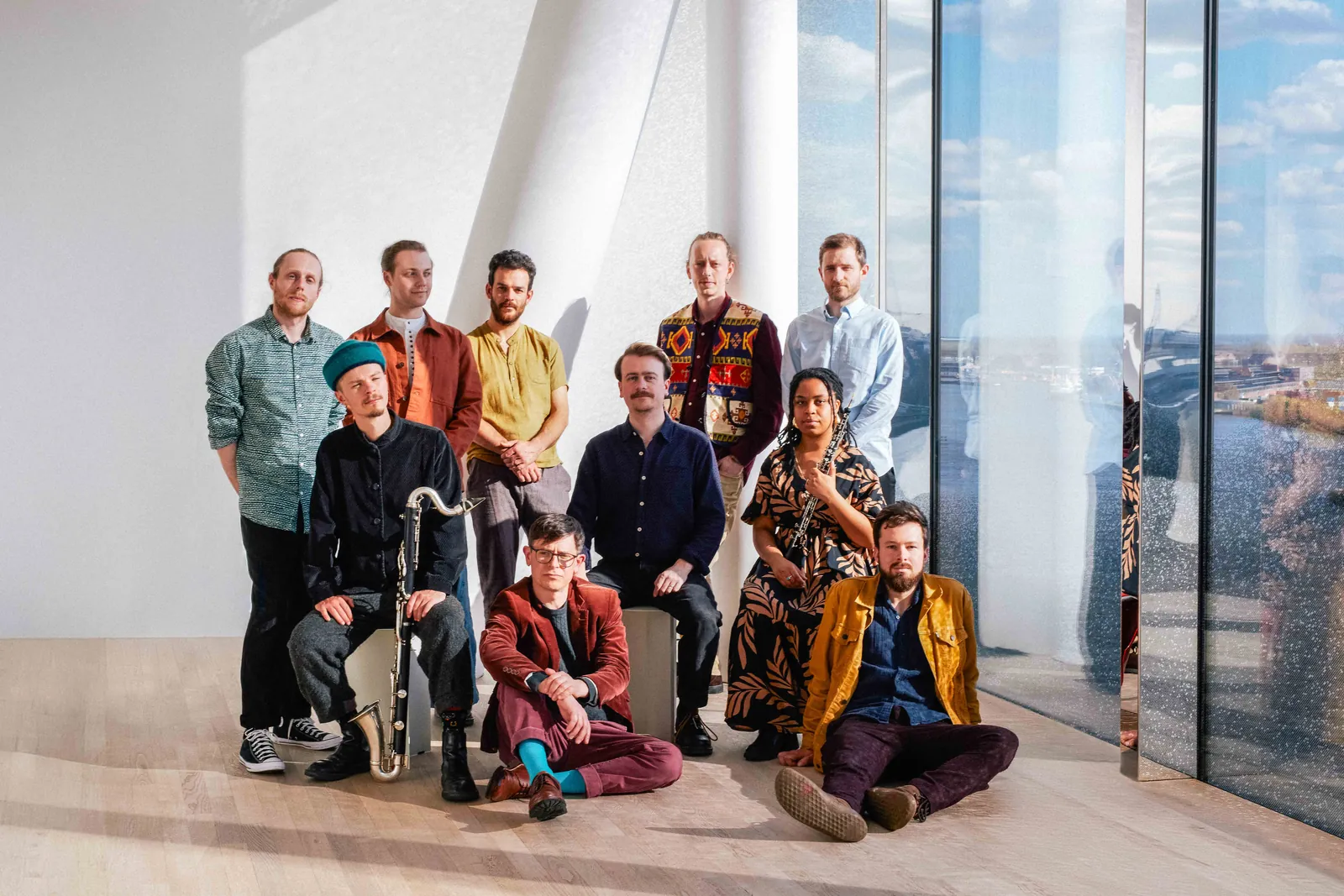
Photographs: Rich Williams, courtesy of Gondwana Records.
Continue reading
- Sebastian Plano: Solo, and being alone with the cello — another composer on what a single instrument can be made to hold.
- Silence in music: why a pause is not emptiness — why the rest and the decay belong to the music, not against it.
- Peter Gregson: the cello, and keeping the art of listening alive — on one line at a time, and the scrapes a cleaner mix would erase.