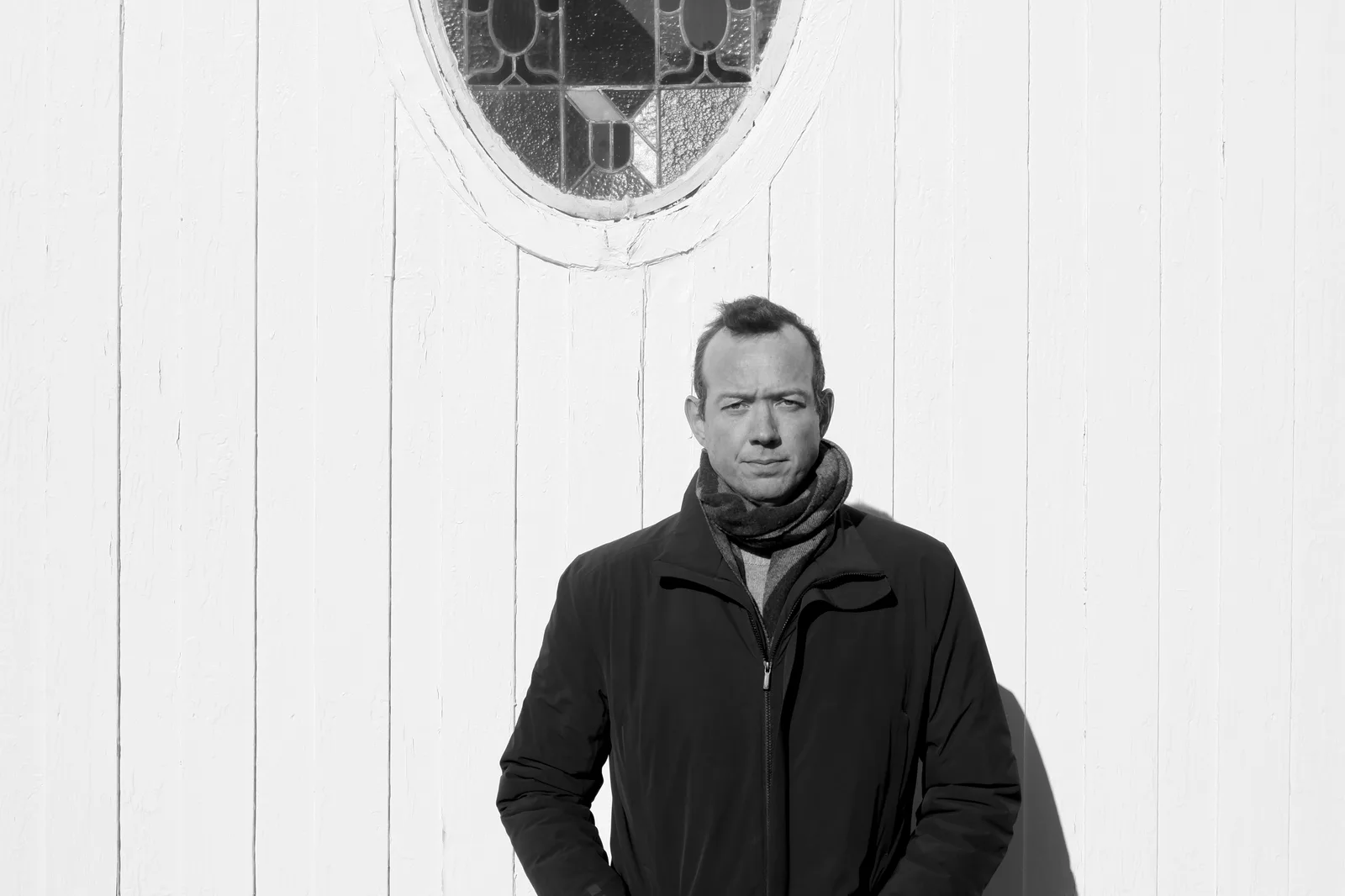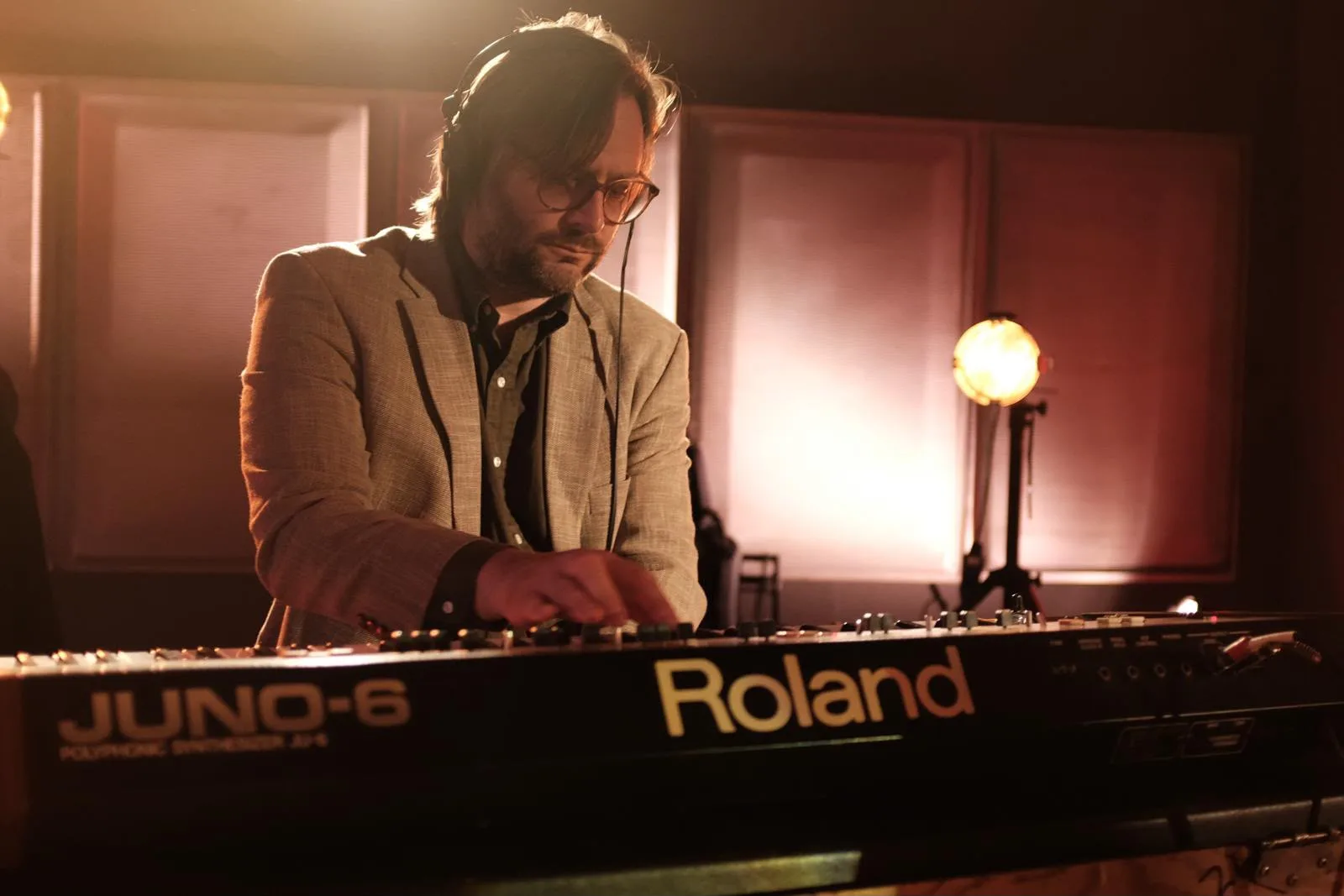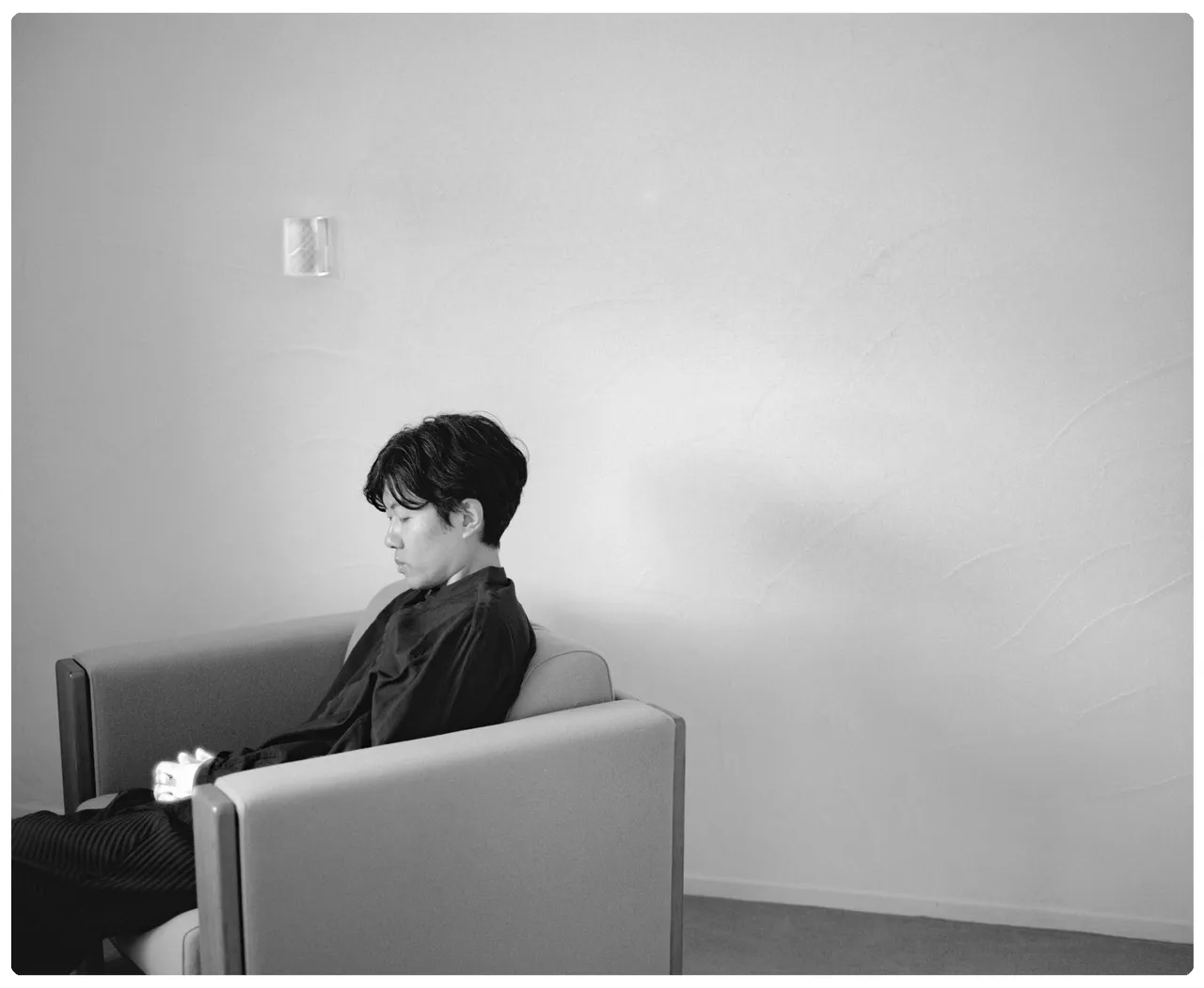
There are records you admire, and records you keep returning to because they ask a question you cannot put down. Everis, by the Japanese composer Yasuhiko Fukuzono, who records as aus and runs the Tokyo label flau, is the second kind. It exists because of a theft. A fellow musician emptied his studio, and his computer went with him, including finished music that lived nowhere else. Most musicians would call that an ending. Fukuzono treated it as a question: when the recording of a piece is gone, what exactly remains? He rebuilt nothing. Working from the fragments that had survived outside the machine (melodies he still carried, a few files once shared with friends, recordings left on his phone), he traced not the lost music but the lost time in which it had once existed. The title says the rest: Everis, from the phrase ever is.
We wanted to hear from aus because his music practises what this journal was founded to defend. For close to two decades, as a composer and as the curator of flau, he has given ordinary sounds a patience almost nothing else in modern listening affords them: a ticket gate, a school brass band practising in a yard, an airport, each set among strings and electronics until several kinds of time seem to sound at once. That is slow listening in its purest form, and Everis turns it towards the deepest subject there is: memory, loss, and what survives of a moment once its record is gone.
For our readers there is a quieter reason too. A journal written from Lithuania could hardly overlook that Fukuzono has stood here himself: about a decade ago he visited Vilnius twice, and performed at St Catherine’s Church, one of the loveliest rooms in the city in which to hear music. What follows are his answers: written in Japanese, at his own pace, and approved by him line by line. The Japanese edition carries his own text.
“Ever is”
Everis was made after your studio was burgled and your finished and unreleased music was lost. You rebuilt it from melodies you still carried and the field recordings left on your phone. When the files were gone, how did you decide what a piece actually was — what survives of a song once its recording disappears?
It wasn’t a process of reconstruction at all. Every piece of data on my computer had been lost, so recreating the original was completely impossible. I was devastated and couldn’t see a way forward. What I did instead was trace the time in which each piece had once existed, using whatever fragments remained. Melodies I still remembered, audio files I had once shared with friends, and recordings left on my phone all became clues that led me back toward that time.
When a piece of music comes into being, it is never just the music that exists in that moment. Countless events, encounters, and durations coexist with it. A single moment does not stand alone; it is continually sustained by everything that surrounds it. Even if I were to forget the landscape before my eyes, perhaps by following the memories of the things that once occupied that place, I could touch the outline of that landscape again. It would not be a perfect reconstruction of what once was, but it could still testify that the landscape truly existed.
For me, the essence of these compositions lies in the relationships that surrounded the moment of their creation, and in the continuity of that time itself. The recordings may have disappeared, but the time in which they came into being did not. From the present, it is still possible to reach toward that time. The title Everis comes from the phrase “ever is”. It does not refer to something that once existed, but to something that still exists somewhere within the flow of time. This album is therefore not a document that reconstructs lost works. Rather, it is an attempt to confirm that the time we believed had been lost continues to exist, even now.
You described the change in method afterwards as “searching more than creating” — moving from sounds you built carefully on your own instruments to preset sounds you find and then edit. Did searching change what you found? Does a sound you come across mean something different from one you make?
In the past, I was primarily concerned with creating sounds that felt uniquely my own (although I don’t believe such a thing truly exists). Recently, however, my interest has shifted away from the uniqueness of individual sounds and toward the relationships between them. The same sound can be heard in completely different ways depending on what is placed beside it. Those relationships have become much more important to me. Whether I’m designing a sound from scratch on a synthesizer or choosing an existing preset, I’m ultimately relying on the same thing: my own memory and intuition. In that sense, the two processes are fundamentally the same.
There has also been a practical shift. Until my equipment was stolen, I worked almost exclusively with hardware synthesizers, so I hadn’t really noticed how dramatically software instruments had improved. Discovering their current quality has been genuinely refreshing. Sounds that once took me hours to create can now often be reached almost immediately. Rather than resisting that change, I decided to embrace it. As a result, I now spend less time crafting individual sounds and much more time thinking about how to place them, how they relate to one another, and what kinds of relationships they create.
“The sediment of time”
Your field recordings come from very ordinary places — ticket gates, a computer keyboard, an airport, a school brass band practising in a yard — often blurred almost past recognition. What makes a particular everyday sound worth keeping? And do you want a listener to recognise where it came from, or to feel it without knowing?
The reason I leave these sounds in my music is a deeply personal one. I’ve never really thought about how I want listeners to feel, nor do I expect them to recognize what each sound actually is. The recordings I used on Everis are closely tied to my own memories, but I have no interest in asking listeners to relive those memories. What interests me instead is the idea of multiple layers of time existing simultaneously within a single work. A sound recorded yesterday and another recorded ten years ago, or the sound of an instrument alongside an environmental recording, can coexist while each retains its own sense of time. What matters to me is not whether a sound comes from a train station ticket gate or an airport. Even if its identity becomes ambiguous, the accumulation of time embedded within it remains. That sediment of time continues to exist within the work, and that is what I hope to preserve.
Even if its identity becomes ambiguous, the accumulation of time embedded within it remains. That sediment of time continues to exist within the work, and that is what I hope to preserve.
“A circle has no endpoint”
You framed the record through the image of an ekaki uta, and “a circle in which all memories overlap”. For someone who doesn’t know the reference: what does building an album as a circle, rather than a line, change about how it asks to be heard?
This also relates to your first question. In Japan, there is a tradition called ekaki-uta (drawing songs) in which a series of simple, seemingly independent actions gradually come together to form a single picture. Only when you reach the end do you realize that every step had been guiding you toward the same image all along. Everis is built in a similar way. Field recordings, electronics, and performed sounds are all fragments gathered from different places and different moments in time. By placing them alongside one another, they gradually become a single piece of music.
A line has a beginning and an end, but a circle has no endpoint. The past does not remain sealed within the past; it continues to exist in relation to the present. If the album allows someone to feel that time is not a single linear flow, but something in which multiple temporalities coexist simultaneously, then I would be very happy. At the same time, that’s only one possible way of reading the work. I don’t want to prescribe a particular interpretation. I hope each listener feels free to experience it in their own way.
“More than information”
You’ve said that lost memories exist everywhere and stay connected to the present. Music holds memory unusually well. Do you think a piece can carry a memory you can no longer consciously reach — and did making Everis return any to you?
During my time working as a speech therapist, I witnessed in clinical practice how deeply melodies can remain in a person’s memory. Of course, this isn’t true for everyone, but for me it was a profound reminder that music is more than just information. It is intimately connected to the very way memory exists.
The record is full of other hands — Kumi Takahara, Henning Schmiedt, Danny Norbury and others — and you’ve said it mattered to be reminded that such players were near you. After a loss that came from inside the music world, what did it mean to rebuild the album with other musicians?
Because this album was an attempt to trace a lost period of time, it felt deeply meaningful to work with people who had been close to me during those years. They, too, are part of my memory of that time. If I was going to revisit that period, I wanted to do it alongside the people who had shared it with me.
“What is left unplayed”
On Eau you built the music around the koto, after years of keyboards and electronics. What drew you back toward a traditional Japanese instrument, and what can the koto say that your usual palette cannot?
Perhaps as a reaction to Everis, I wanted to make a record with as few sounds as possible—one that allowed me to focus on each individual sound in itself. My interest in the koto began while working on a sound design project involving traditional Japanese instruments. Once I started playing it, I was captivated by the way the sound emerges directly from the strings, by the subtle shifts in pitch created through hikiiro (string bending), and by the fact that its tones do not linger for very long. That quality of decay carries a completely different sense of time from the electronic music I had been making. The experience of sounds disappearing…and of silence, or even what is left unplayed, becoming part of the music….felt entirely new to me.
“Never zero”
You once said that even when recognition is scarce, if you keep making what you need to make, “someone else in the world might find it”. That is a quiet kind of faith. Where does it come from — and has it been answered?
Through my activity, especially my label FLAU, I hope to draw attention to what might be considered alternative. But for me, that doesn’t simply mean shining a light on something small or overlooked. It’s about recognizing that multiple worlds can exist simultaneously. I believe everything influences everything else, even if only slightly. A work of art, an encounter between people, or a seemingly insignificant event can all become connected to something else in ways we may never fully see. Those influences may be very small, but they are never zero. So when I say that “someone, somewhere in the world, might discover it,” I don’t mean it as an optimistic hope or a way of encouraging myself. It’s simply how I understand the world: as a place where things are already connected, whether we notice those connections or not.
Listen
Label: flau.jp
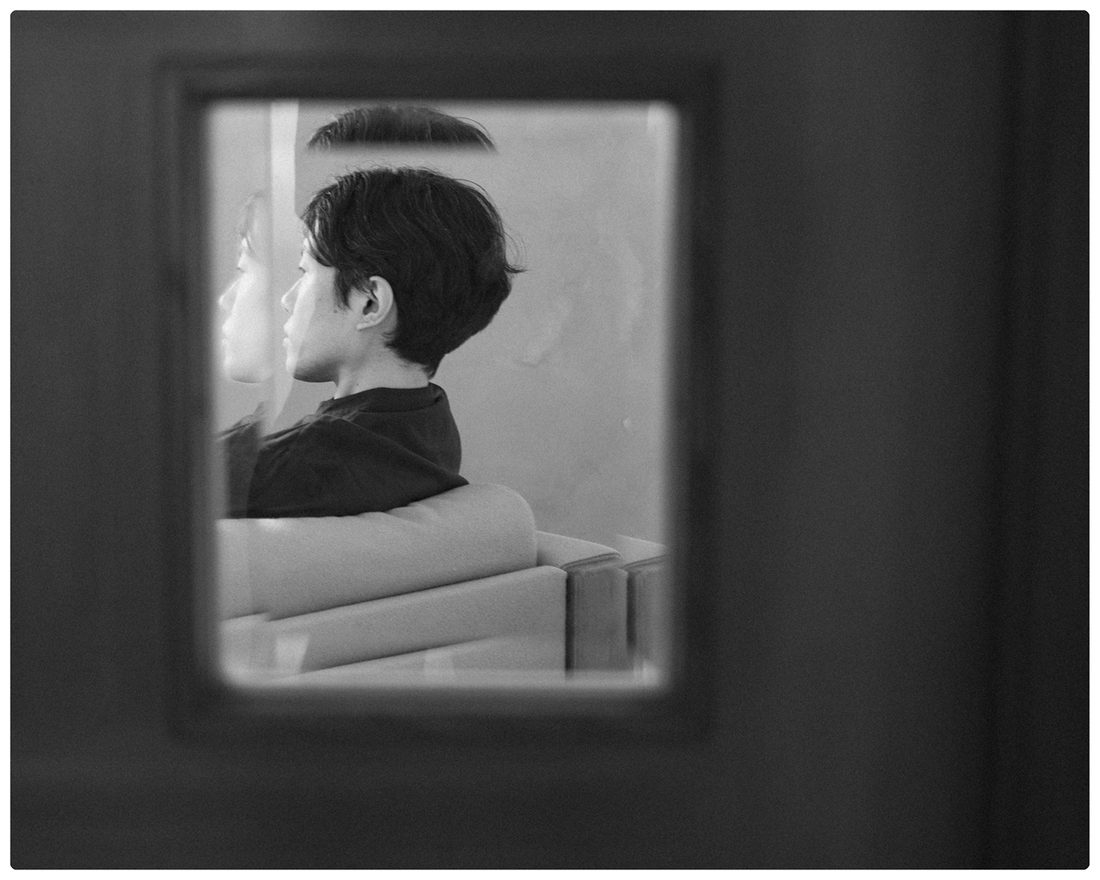
Photographs: Kazuhei Kimura and Ryo Mitamura, provided by the artist.
Continue reading
- Silence in music: the pause is not emptiness — why the rest and the decay belong to the music, not against it.
- Why slow music reaches deeper — the physiology of tempo, and why a single unhurried line can hold a whole room.
- Peter Gregson: the cello, and keeping the art of listening alive — another composer on what survives when the music is remade from a single instrument.