
In the late 1990s José González spent his days in a cold University of Gothenburg laboratory, working toward a doctorate in biochemistry — replicating viruses — and his nights four-tracking lo-fi songs in his apartment. When “Crosses” reached Swedish radio in 2003, he asked his department for a six-month leave. He never went back. The lab habits did. To understand his music it helps to picture the pipette and the bare, plectrum-less right hand as two tools of the same methodical mind: isolate one variable, repeat it, test it, refine — and do not release the result until it holds.
The lab and the apartment
González took a master’s in molecular biology at Gothenburg and had begun a biochemistry PhD before music pulled him out of it. The quiet, fingerpicked solo records are not where he started, either: through the 1990s he played bass and electric guitar in punk and hardcore bands. He describes writing in plainly experimental terms — “I do a lot of trial and error before I have my final product” — and deliberately sets himself problems he cannot yet solve: “I write the guitar slightly above my skill level. I need my time to rehearse quite a lot, and that’s one of the main reasons why I’m slow.” Slowness, here, is not a temperament. It is the time a controlled experiment takes.
A guitar that thinks in bass lines
The folk-introvert image hides what is actually going on under his hands, which is rhythm. González does not strum chords; he runs the guitar as a small contrapuntal engine. “I have my different tunings,” he explains, “and that allows me to not think in terms of chords, but to think in bass lines and arpeggios. Then I always think about the highest note as an extra melody. That’s how I try to make the song as dense as possible with only one guitar.” The thumb is the drummer, the fingers the melody — a division he traces to Nick Drake, “a big inspiration in terms of tuning and using the thumb to do the bass”.
The pulse runs deeper than influence. His father sang in an Argentine folk band — “harmonies and bomba drums, two or three guitars” — and González has chased that percussiveness outward: when the Tuareg guitarist Bombino visited Gothenburg on a tour day off, the two improvised in a studio, and González came away studying the mechanics. “I was surprised how much he played with just his thumb and index finger… a lot of hammer-ons and pull-offs.” On Local Valley (2021) he stopped implying the rhythm and built it, programming beats on an iPad app and layering them like a loop pedal. He keeps a bank of specific tunings for the purpose — “‘El Invento’ is dropped D, ‘Visions’ is D-A-D-A-B-E. Maybe half of the album is E-A-D-A-B-E” — and on one track capos five of the six strings, leaving a single one open to ring.
The cover as a controlled experiment
This is why his covers matter more than covers usually do. His best-known recording is not one of his songs at all: “Heartbeats”, a synth-pop track by his fellow Swedes The Knife, which he stripped to one nylon-string guitar and one voice. He had learned it, with a batch of others, simply to pad out short early sets. After a 2005 Sony Bravia advert sent 250,000 coloured balls bouncing down a San Francisco street to it, the recording reached number nine in the UK and has since passed a hundred million streams — larger than anything he has written. The same fate met his takes on Massive Attack’s “Teardrop” and Kylie Minogue’s “Hand on Your Heart”.
A lesser artist would find this embarrassing. For González it is the clearest statement of his method. Strip a dance track to its skeleton and you are running an experiment: which part of a song is load-bearing once the production is gone? His answer, every time, is the interval and the rhythmic cell — the molecule. The cover is the lab in public.
Tone, treated like a variable
The control extends to the sound itself, which he engineers with an almost clinical specificity. He covers about two-thirds of the guitar’s soundhole with tape to kill feedback — “two-thirds seems to be the sweet spot” — keeps old strings on the instrument for their dampened treble, and notch-filters the guitar’s harshness out of the signal: “I’m allergic to 2 kilohertz.” Nothing is left to chance that can be made a setting.
González treats a melody the way he once treated a virus: a structure you can strip to its core, move to a new host, and watch replicate.
Reason, set to a groove
The mind behind all this is openly rationalist, and the records say so. In Our Nature (2007) was shaped by Richard Dawkins and Peter Singer; González is an outspoken atheist and vegetarian, and frames the worldview warmly rather than coldly: “Humanism is a framework for thinking about our existence — how we can try to flourish with this life we know that we have, without asking for more lives before or after.” The diaspora is the other half. His parents, politically active students, fled Argentina after the 1976 coup, were granted asylum through the Swedish consulate in Rio, and resettled in Gothenburg in 1977, the year before he was born. It took him until 2021, and the birth of his daughter Laura, to write his first song in Spanish — “El Invento”, the language of his parents folded back into the work at forty-two. His 2026 album Against the Dying of the Light deepens the desert-blues groove and the argument both, which he calls “a reflection on how we create hurdles to human flourishing by clinging stubbornly to dogmatic ideologies” — the secular humanist making the case for reason over a Saharan pulse.
When González dismantled “Heartbeats” he kept only the structure — the interval, the rhythmic cell — and threw the synths away, and the result outgrew both the original and everything he has written since. That is the scientist’s quiet, faintly unsettling verdict: a melody, like a virus, is a structure that can be transferred to a new host and still replicate. Two decades of stripping songs to one nylon string and one human pulse have been, in effect, a long experiment in which musical structures survive the procedure — and the data keeps returning the same answer. It is rhythm.
Sources
- José González (singer) — biography, science background, discography, Junip, family/diaspora — Wikipedia.
- Adam Perlmutter, “José González’s Inner Visions” — method, tunings, tone, the Nick Drake division (quotes) — Premier Guitar.
- “José González on Local Valley” — tunings, the Bombino jam, programmed rhythm — Acoustic Guitar.
- “From biochemistry to nylon-string troubadour” — the bomba-drum lineage — Guitar.com.
- José González on humanism and Local Valley — Atwood Magazine.
- “Heartbeats” — The Knife original, the Bravia advert, chart peak — Official Charts.
- Against the Dying of the Light (2026) — release and statement — jose-gonzalez.com.
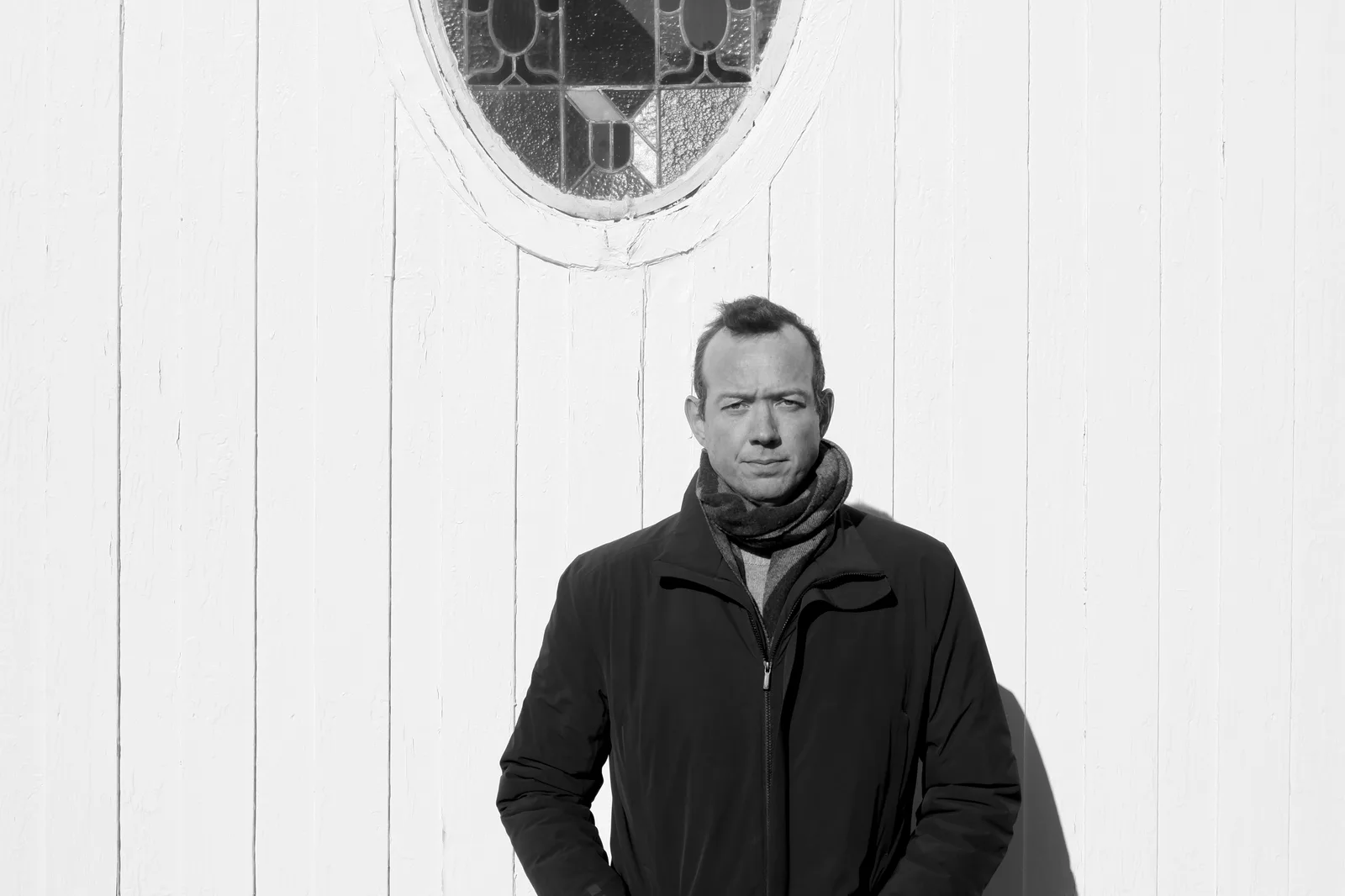
- Hero photo: “José González (ZMF 2017)” by Joergens.mi, via Wikimedia Commons, CC BY-SA 4.0.
Listen
Three official recordings — including the cover that outgrew everything else.
Continue reading
- The Innocence Mission: indie folk that thinks in a quieter sentence — another writer of hushed, fingerpicked songs as conversation.
- Cinematic acoustic pop: four artists — kindred acoustic voices, including González’s soundtrack reach.
- Sufjan Stevens and the architecture of inner light — another meticulous studio mind building inward.
- Tommy Emmanuel: the band between his ears — another guitarist for whom the right hand is the entire arrangement.
_jm39824.jpg)