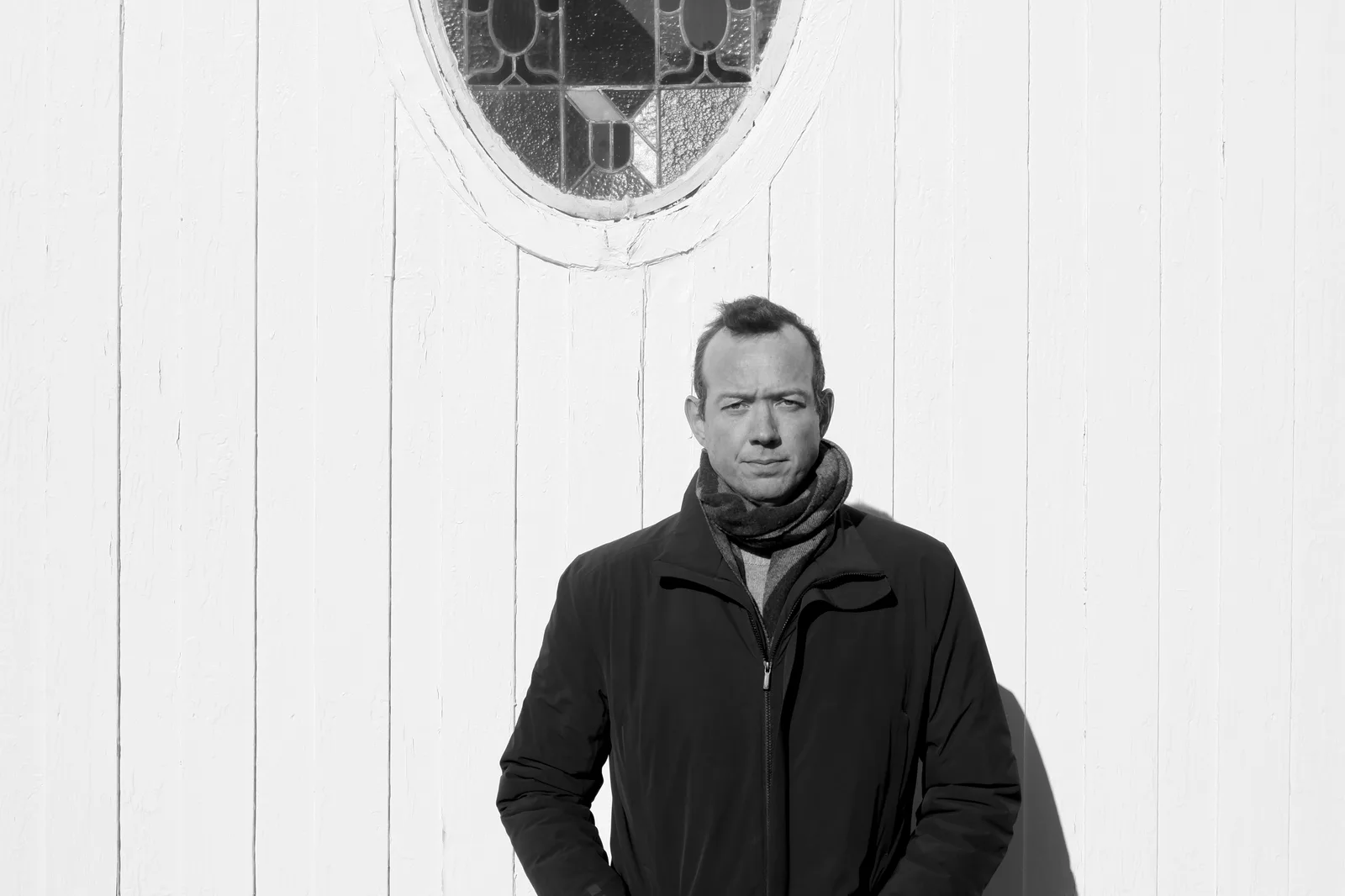
Sufjan Stevens does not write songs so much as he builds rooms. Some of the rooms are small and wooden, lit by a single banjo. Some open into entire choirs. What stays consistent across the rooms is not the instrumentation — which can change radically between Carrie & Lowell and The Ascension — but the quality of light inside them.
Calling that quality “spiritual” is the easiest shorthand, and it is not wrong, but it is not quite enough either. What Stevens does is more specific: he makes music that behaves like memory. The arrangements never sit firmly in the present tense. They drift in from a distance, almost arrive, then recede slightly — leaving a trace rather than a statement.
Why memory and not narrative
Most pop music tells you a story. Stevens’ music does something closer to staging a story — placing the listener at the threshold of a scene that is already in progress. You overhear it. You complete it.
This is why his records reward slow listening so disproportionately. On first pass they can seem decorative; on the fifth pass they have rearranged something inside you.
A modern hymnal
It is not accidental that so many listeners describe his work as “sacred” even when it is explicitly secular. The forms are old: hymn, lament, processional, lullaby. The vocabulary is contemporary. The combination produces something rare — modern devotional music for people who would never call themselves devout.