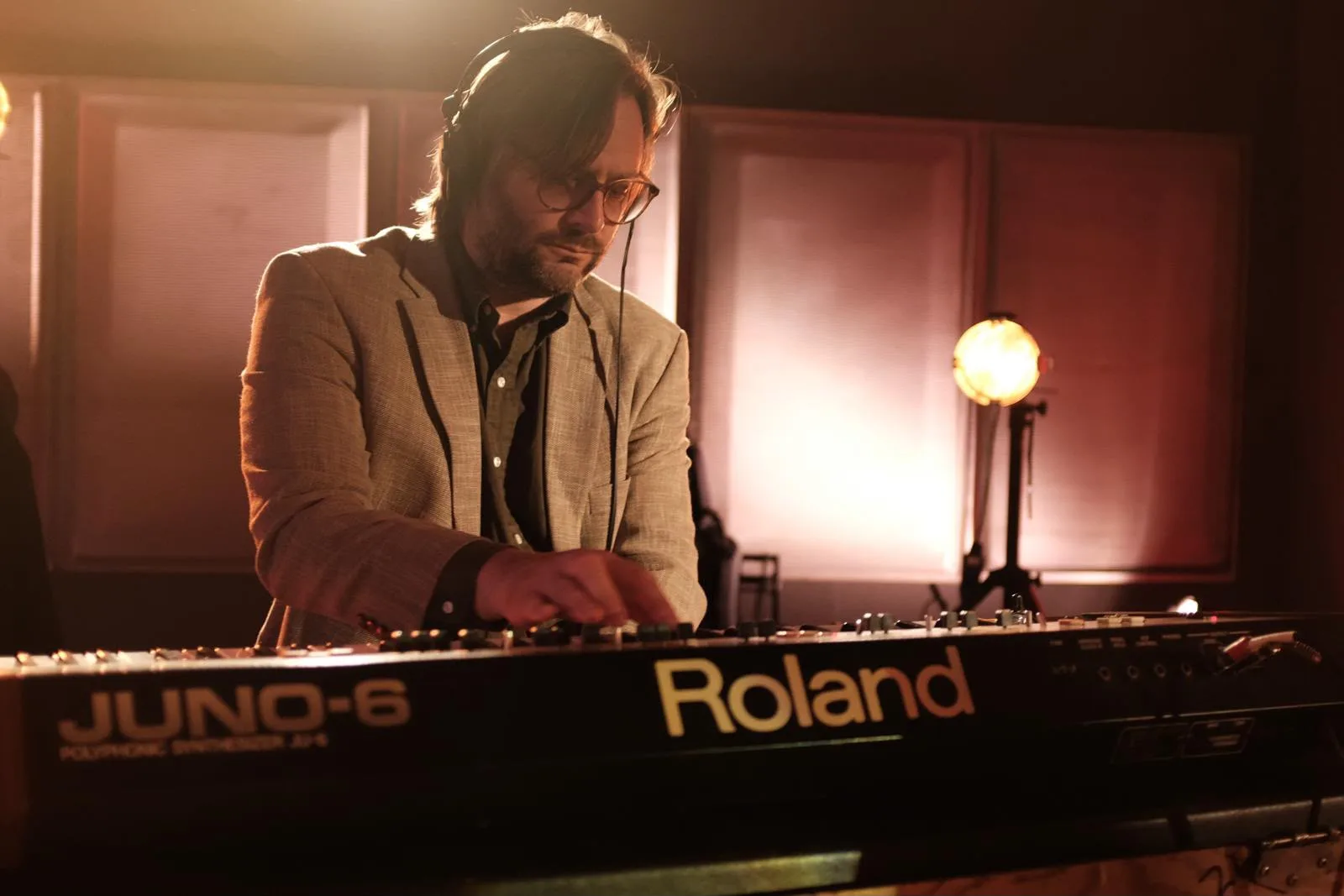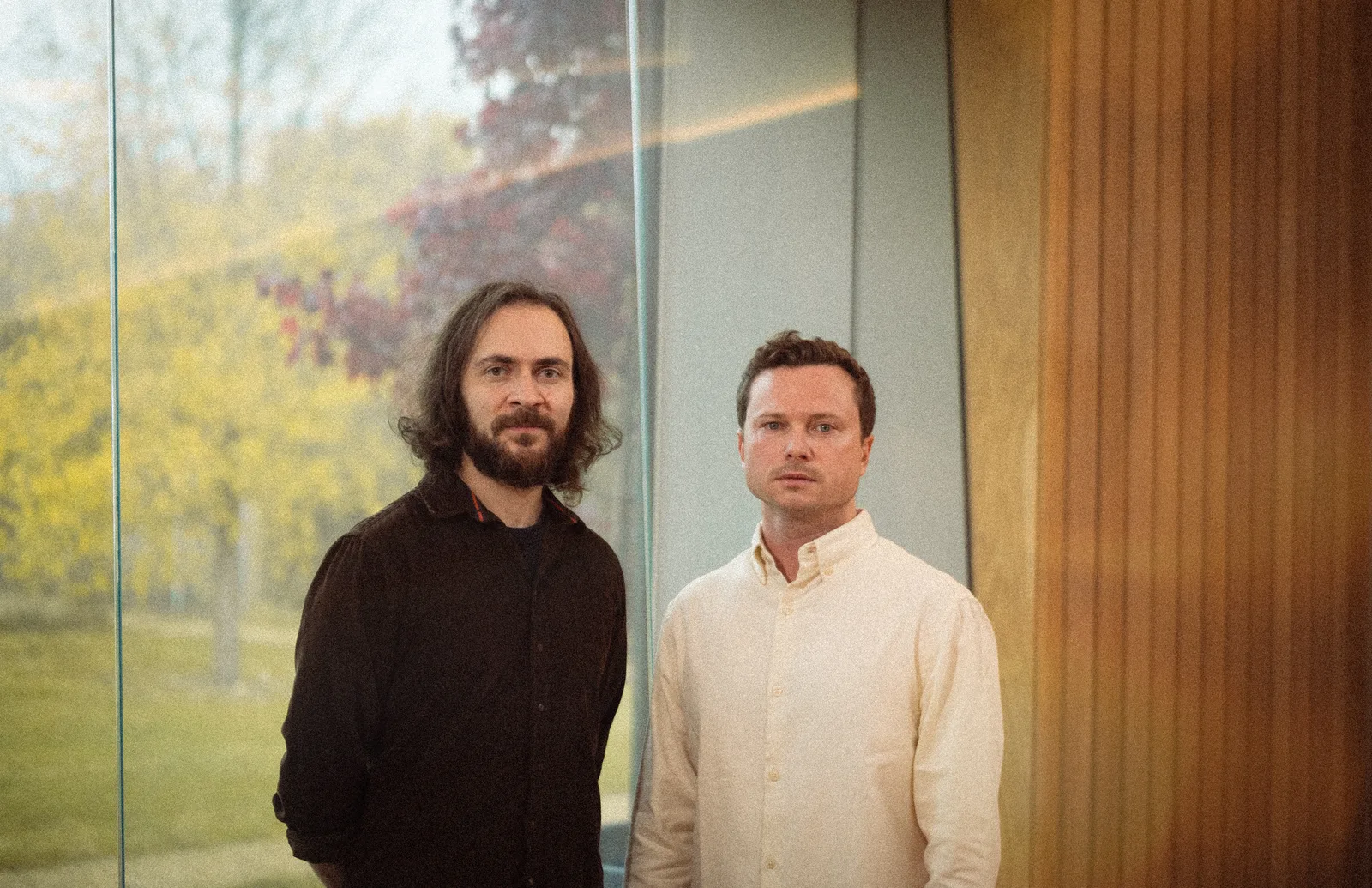
There is an old, slightly impolite question that hovers around any album of literary songs in 2026: who is it for? The contemporary listening environment rewards music that arrives quickly, signals strongly, and exits before the listener notices. Nemiga ir noktiurnai — Justinas Stanislovaitis’s third sung-poetry album — is the precise opposite. It is not loud. It is not in a hurry. Its real subject is what happens to attention in the room when a song refuses to insist on itself.
Disclosure: Justinas Stanislovaitis is the founding editor of Music for Thought. This piece is published under the same editorial standards as the rest of the magazine; readers should weigh it accordingly.
The Lithuanian critical reception in 2025 already noticed this. Lrytas introduced the record as music that speaks more than its words, framing it inside the sung-poetry tradition where text and tempo are equally load-bearing. The framing matters because it tells you what kind of attention the record is asking for. Not the attention you bring to a playlist. The attention you bring to a small book of poems, read in lamplight, in late winter, with the heating clicking on.
What the record is doing
The first thing to say about the album is what it is not. It is not a concept record. It is not built around a hook or a single. It does not lean on big production gestures to keep the listener engaged. The work happens at much smaller scales — a held breath, a placement of consonants, a deliberate guitar note dropped slightly behind the beat. Each of those choices is asking the listener to lean in. Across an album, the cumulative effect is that the listener stops listening for something and starts listening into something.
That stylistic gravity sits inside a particular Lithuanian register. Public materials describe Stanislovaitis as a singer, guitarist, songwriter and composer; Bernardinai’s profile adds that he is also the founder and lead vocalist of the pop-rock project Justin 3 and a composer for film, television, and commercial work, with parallel stage credits in productions such as Rent, Sweet Charity, and The Great Comet of 1812. That biography is relevant because it shows where the patience on this record comes from. A person who has spent twenty years moving between musical theatre, pop-rock band leadership, screen scoring and acoustic recital is a person who has thought, professionally, about how form shapes attention. The album is the most concentrated form he has chosen.
The album is built on a thesis many records refuse to commit to: that a song does not need to fight for its space in the listener’s day — it only needs to hold its space when the listener arrives.
Shakespeare’s Sonnets reborn in music — and what it tells us
To understand the record, it helps to look at one of its sibling projects. The 2025 Užutrakis concert Shakespeare’s Sonnets Reborn in Music placed Renaissance love poetry alongside contemporary musical language, and explicitly framed the meeting as a bridge between timeless emotion, lyric sensitivity, and the present tense. That programme — and the editorial vocabulary around it — is the same vocabulary that the album operates inside. Nemiga ir noktiurnai treats the lyric not as decoration but as the centre of gravity. The arrangements are there to give the lyric room to be heard at full weight. The room is part of the song.
For listeners who already know the Between Silence and Light programme — Stanislovaitis’s 75-to-90-minute seated concert built around Leonard Cohen, Nick Cave, Sting, and Peter Gabriel — the album reads as the same artistic position translated into recorded form. The concert programme was a way to demonstrate, with a small audience and a quiet room, that attention is an ethical act. The album does the same demonstration, with one significant change: the room is the listener’s own. Whatever attention the listener brings, the album will meet without raising its voice.
What the science quietly confirms
It would be easy, in writing about a poet-songwriter, to drift into mood-piece language and forget that the listener’s body is doing measurable things while it listens. A 2023 meta-analysis of randomised studies on musicking found a small-to-moderate positive overall effect on emotion regulation, with the strongest evidence for self-selected, preference-aligned listening. The listener who chooses to put on Nemiga ir noktiurnai late at night is putting the body into precisely the conditions the literature predicts will yield the strongest emotional response: chosen music, congruent mood, low ambient distraction.
The WHO’s major arts-and-health synthesis — covering more than three thousand studies — concluded that arts engagement supports health and wellbeing across the lifespan, in ways that are not metaphorical. A record like this one fits inside that broader finding. The benefit is not that the songs will fix something. The benefit is that the listener is being offered a structured way to inhabit a state that, in most other rooms of contemporary life, gets interrupted before it can finish.
The “artist of emotional permission” reading
A careful editorial reading of Stanislovaitis’s work asks what kind of artist he actually is, separate from the bare facts of catalogue and credits. The most accurate one-line answer is probably this: he is an artist of emotional permission. The songs are not pushing the listener anywhere. They are giving the listener permission to be in a state — slow, attentive, sometimes melancholy, often quiet — that the listener already wanted to be in but had not been given a place for.
That permission is not nothing. In a media environment that is engineered to push listeners out of stillness and back into engagement, a record that simply allows stillness is structurally rare. It does not require new arguments about why slow music is good. It only requires the work of holding a room together for forty minutes, without the production tricks that would make holding easier.
This kind of work also tends to age well. Records that depend on novelty fade as the novelty fades. Records that depend on a relationship to the listener’s attention — that work inside the listener rather than at the listener — tend to keep working. Stanislovaitis’s earlier work has done this. The third album appears, on early listening, to be the most refined version of the pattern he has yet recorded.
How to listen
A small practical word for anyone coming to Nemiga ir noktiurnai for the first time. Do not listen to it while doing something else. The record will not punish you if you do, but you will not hear what is actually on it. The arrangement choices are made in service of the lyric, and the lyric is made in service of an emotional state that takes a few minutes to enter and a few more to settle in. Forty minutes alone with the record, in a room with one warm light and no screen, is the listening condition the album was designed for.
The honest closing observation is this. We do not need every record in the world to ask for this kind of attention. We need some records to ask for it, because the conditions for that attention will not maintain themselves automatically. Nemiga ir noktiurnai is one of those records. That is what makes it worth defending in a year that does not, structurally, defend it on its own.
Sources
- Justinas Stanislovaitis — official artist site, justinasstanislovaitis.lt.
- Bernardinai — Justinas Stanislovaitis tag and profile, bernardinai.lt.
- Lrytas — review and context of Nemiga ir noktiurnai (2025), lrytas.lt.
- Premium Event Network — Between Silence and Light programme description, premiumeventnetwork.com.
- Music and emotion regulation — 2023 meta-analysis of randomised studies on musicking.
- WHO Regional Office for Europe — What is the evidence on the role of the arts in improving health and well-being? (Fancourt & Finn, 2019).
- Hero photo: Justinas Stanislovaitis live photograph, via justinasstanislovaitis.lt/en/media/ — used per the artist’s stated permission for editorial coverage.
Continue reading
- Between Silence and Light — a slow-listening concert — the concert sibling to this album.
- Why slow music reaches deeper than it seems — the body-side physiology of slow tempo.
- Silence in music: why a pause is not emptiness — the structural argument for restraint.