There is a particular kind of concert that no longer counts as ordinary. It does not begin with a hook. It does not encourage talking through the verses. It does not arrive in the room as energy. It arrives as attention. Between Silence and Light, a 75-to-90-minute seated programme built by Lithuanian songwriter Justinas Stanislovaitis around the work of Leonard Cohen, Nick Cave, Sting, Peter Gabriel — and his own quiet writing — is one of those concerts. It is designed for an audience that has come specifically to listen.
Disclosure: Justinas Stanislovaitis is the founding editor of Music for Thought. This piece is published under the same editorial standards as the rest of the magazine; readers should weigh it accordingly.
Public descriptions of the programme differ slightly in the exact set of named composers (one summary highlights Cohen, Gabriel, Sting and The Beatles; another foregrounds Cohen, Cave, Sting and Gabriel), and public video material shows at least Cohen and Cave interpretations. The variation is honest: the programme is not a fixed setlist but a literary-song atmosphere that lets pieces move in and out. What does not move is the form. A seated audience. Carefully shaped silence. A length that asks for ninety minutes, not three.
A concert as a tempo of thinking
To call this programme a recital is too narrow. To call it a song set is too loose. The truer description is closer to a tempo of thinking offered as music. Stanislovaitis’ work, in his own public framing, sits inside the tradition of poetic song; the interpretations on this programme — Cohen, Cave, Sting, Gabriel — are picked because their songs have the same kind of slowness inside them. They are written to be listened into, not consumed.
That has implications for the room. A seated, attentive audience is not an aesthetic preference here. It is a structural condition. The pieces in this programme are arranged so that the silence between phrases counts as part of the music. A standing, drinks-in-hand audience would not be able to hear it. A seated, quiet audience can — and what they hear, in those gaps, is not nothing.
A concert that asks for attention is already an argument against the speed of the day that brought you to your seat.
What Cohen, Cave, Sting and Gabriel share
The composers in this programme do not share a sound. They share a register. Leonard Cohen brings the existential gravity that his catalogue has come to define: love, loss, death, faith, and the dignity of a flawed voice carrying difficult lines. Nick Cave brings a different intensity into the same gravitational field: love and mourning and faith treated not as separate themes but as variations of one another, often with a moral urgency that does not soften with age. Sting brings what Stanislovaitis treats with equal care — the literary, theatrical, historically-aware kind of pop songwriting, in which a line can hold an entire interior monologue. Peter Gabriel brings the meditative arc, the patient unfolding of a song that does not need to declare itself loudly.
Stanislovaitis’ selection is not a greatest-hits gesture. It is a careful triangulation. The four bodies of work, taken together, mark out a shared territory: fragile dignity, slow self-knowledge, the place where intelligence and emotion meet without humiliating each other. That territory is what the programme actually performs. The audience is not there to hear songs they recognise. They are there to be inside a thinking room.
The form is the argument
There is one more thing worth saying clearly. Between Silence and Light is not just a programme of songs by literary songwriters. The form of the concert — seated, ninety minutes, carefully shaped silence, restrained instrumentation — is itself a small philosophical claim about how attention should be treated in 2026. Most contemporary live music is engineered for the opposite: short hooks, loud peaks, fast turnover, sociable distraction. This programme is engineered for the opposite of that opposite. It assumes the audience came to listen because listening is what they were missing.
This makes it less a concert and more an invitation. It says: you are allowed to spend ninety minutes inside a single emotional climate without being asked to do anything but be there. For some audiences that will sound like very little. For others it will sound like the rarest offer they have been made in months. The latter audience is who the programme is for.
Why this matters now
The most easily defended argument is straightforward. Music that asks for attention is becoming harder to deliver because the conditions for it — quiet rooms, patient listeners, undivided ninety-minute attention spans — are being thinned out by everything else. Programmes like Between Silence and Light are not nostalgic. They are doing rebuilding work. They show that a concert can still be a place where the listener and the performer share a slow clock. The pieces by Cohen, Cave, Sting and Gabriel are vehicles for that clock, not its content.
The most defensible aesthetic argument is just as simple. A concert that fits this description in 2026 has to be intentional in a way that earlier generations did not have to be. The room has to be designed. The silence has to be defended. The selection has to mean something. And, very importantly, the performer has to have the patience to deliver music that does not reward fast attention. The reason this programme reads as serious work is that it meets every one of those conditions, and treats them not as constraints but as the actual material.
Sources
- Between Silence and Light — project description, Premium Event Network.
- Justinas Stanislovaitis — official artist page, justinasstanislovaitis.lt.
- Leonard Cohen — biography and thematic overview, Britannica.
- Nick Cave — public reflections on faith, love and grief, The Red Hand Files.
- Peter Gabriel — discography and thematic arc, public press materials.
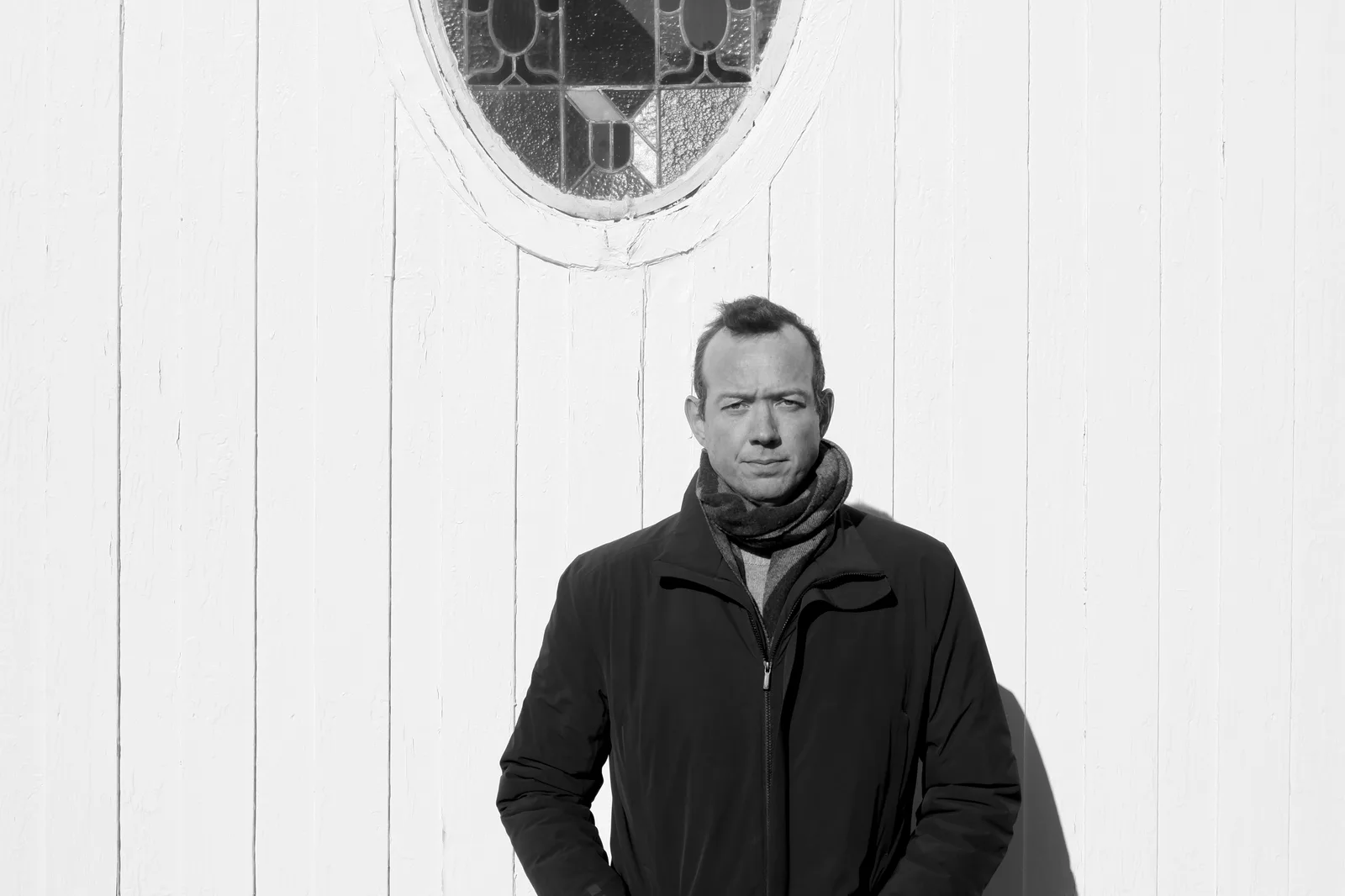
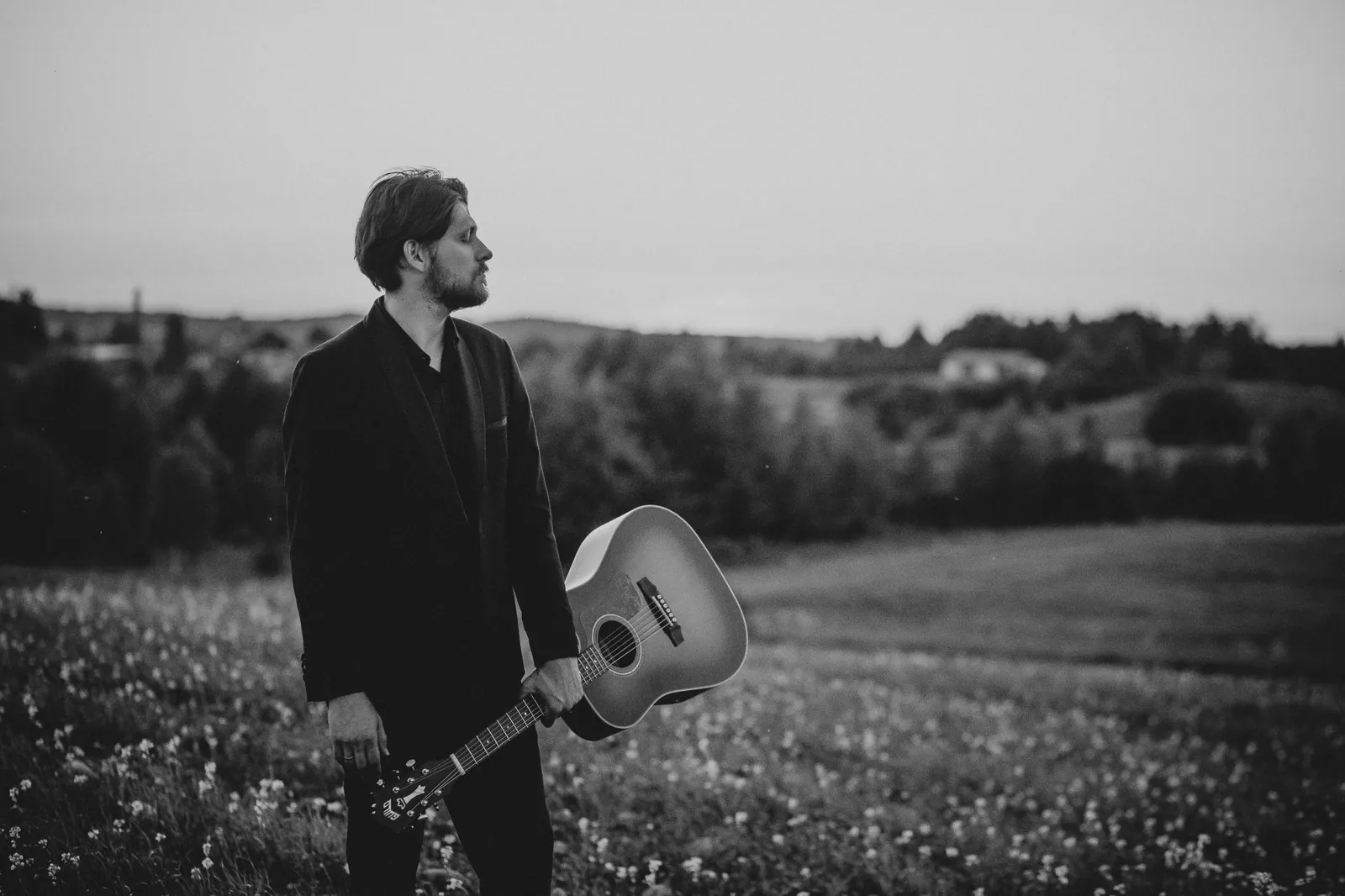
- Hero photo: Justinas Stanislovaitis press portrait, via justinasstanislovaitis.lt/en/media/ — used per the artist’s stated permission for editorial coverage.
Listen
Two segments from the programme itself, published by the artist:
- Between Silence and Light — “In My Secret Life” (Leonard Cohen)
- Between Silence and Light — “Into My Arms” (Nick Cave)
Continue reading
- Why slow music reaches deeper than it seems — the physiology of the tempo this concert lives at.
- Why live acoustic concerts move us — the case for unamplified live presence.
- Against the algorithm: discovering music slowly — the cultural cousin of a seated programme.