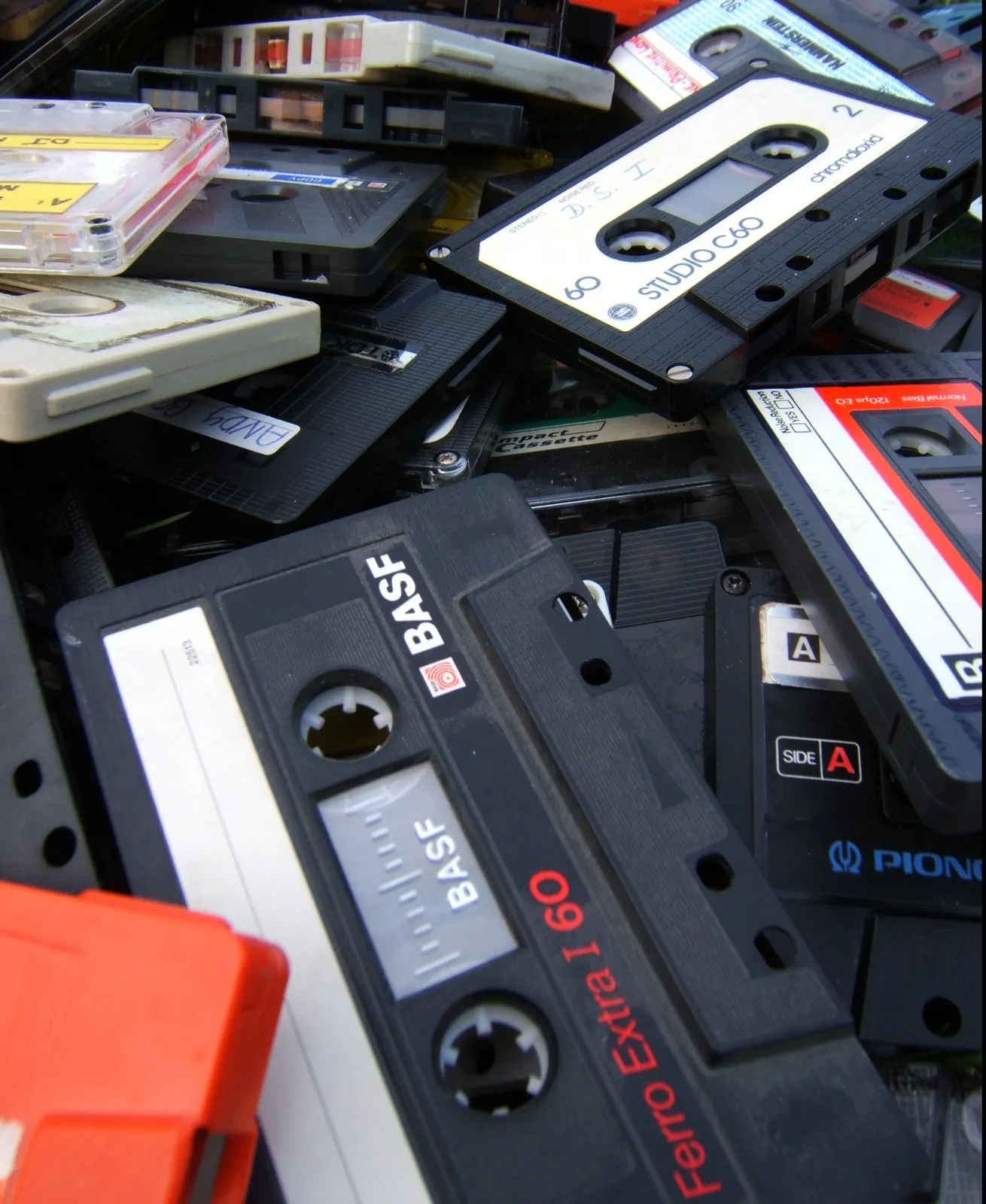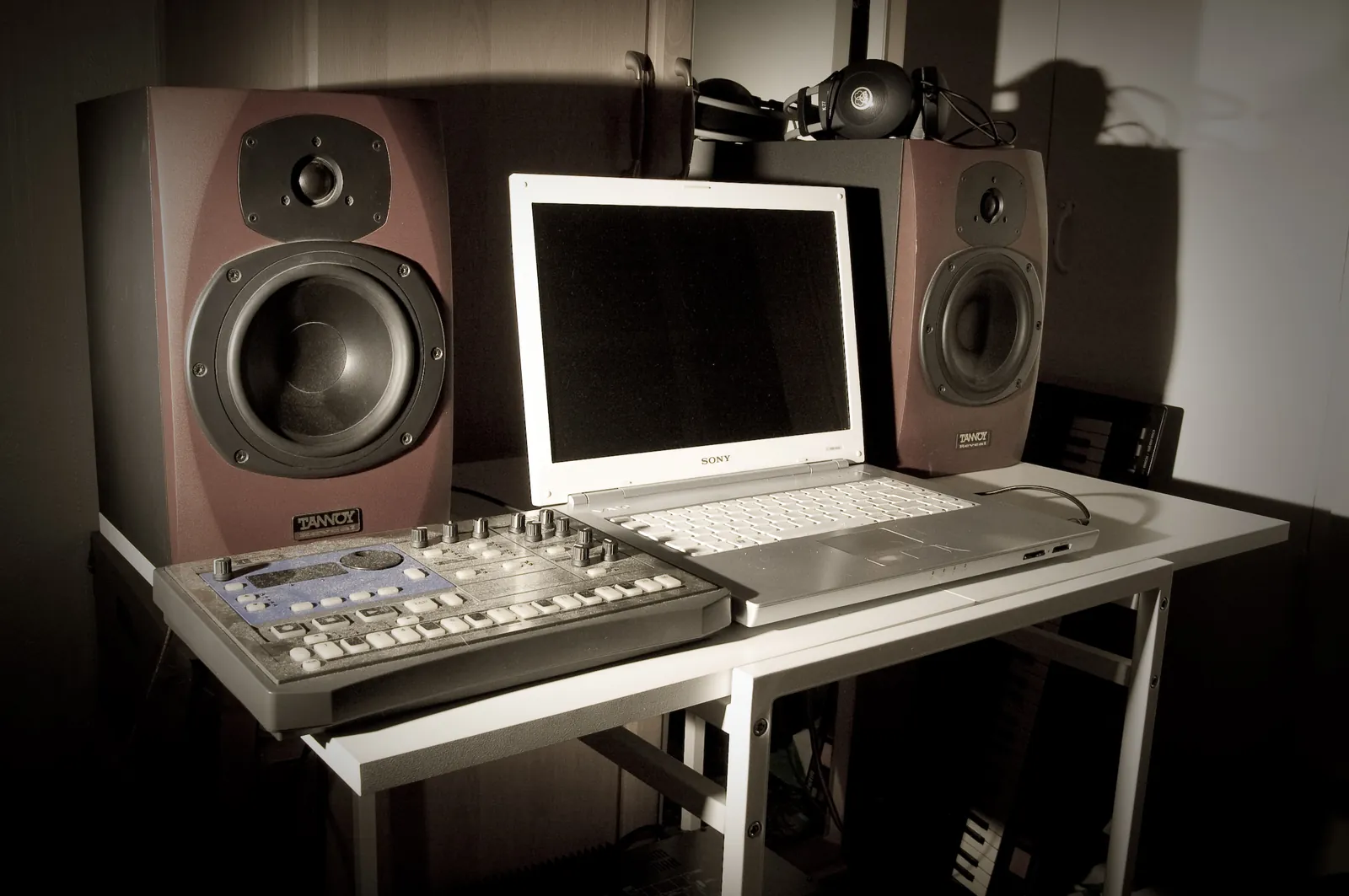
A useful test for any claim about music and focus is this: does it survive a separation between reading and coding? Most popular advice fails it. The two tasks look similar from the outside — desk, screen, sustained attention — but inside, they recruit different cognitive systems. Reading is almost entirely a language task. Coding is a hybrid of language, symbolic manipulation, working memory, and design judgement. The evidence treats them differently, and so should we.
Reading is a language task. Treat lyrics accordingly.
The recent research on background music and reading comprehension is unusually consistent in one direction. Pop music with lyrics tends to reduce reading comprehension, and the language of the lyrics matters: semantic interference grows when the background language overlaps with the language being read. A 2025 study on lexical-semantic processing added another layer worth keeping. Familiar instrumental music reduced mind wandering and sped lexical-semantic decisions compared to unfamiliar music or environmental noise — suggesting that familiar and non-vocal is often a better rule than calm at all costs.
That last finding is worth pausing on. It contradicts a common assumption that the right reading music is anything slow and pretty. The data point closer to a different recipe: music you already know well enough not to attend to, free of words, with enough rhythmic and timbral predictability that your brain stops asking what is going to happen next? and lets the page hold attention.
For reading, then, the conservative default is silence. The realistic compromise, when silence is not available, is instrumental music in a language you understand — Brian Eno, Max Richter, Ólafur Arnalds, Nils Frahm, Harold Budd, A Winged Victory for the Sullen — and ideally something familiar enough that you can stop listening to it on purpose.
Coding is not reading. The evidence reflects that.
Coding is the more complicated case. The best direct software-engineering source on this is Barton and colleagues’ survey-based IEEE Software paper, which reports that music listening is common among professional software developers, especially when writing code or doing repetitive tasks. That tells us something important about developer culture: practitioners reach for music as a self-regulation tool. It does not, however, prove that music universally improves code quality.
When the work gets cognitively dense — debugging, tracing logic across multiple files, reading documentation, reasoning about architecture, or switching contexts under load — coding starts to look more like the other demanding cognitive tasks where distraction is costly. Research on programming under stress shows that noise degrades performance on programming tasks. Research on office sound masking shows that intelligible speech is especially disruptive, while masking sound or less semantically intrusive material is more protective. In other words: for coders, music often helps less by boosting genius than by blocking worse distractions.
The shape of helpful focus music in 2026 is also better characterised than it was a decade ago. A 2025 PLOS ONE study described work flow music — strong rhythm, simple tonality, moderate dynamism, broad but controlled spectral energy, and no lyrics — as improving mood and selective-attention task performance without reducing accuracy. That is more useful than the generic recommendation lo-fi is good, because it gives an acoustic profile rather than a genre. Many lo-fi tracks fit it; some do not. Some ambient pieces fit it; some are too unstructured. Some film scores fit it; some are too dynamically aggressive.
The shape of helpful focus music is acoustic, not generic. No lyrics, predictable rhythm, no melodic surprise that hijacks attention is the rule. Lo-fi and ambient are merely common containers for it.
A working rule, task-by-task
A defensible operating rule, drawn from the evidence rather than from listening-trend tribalism:
- Deep reading of difficult prose, technical papers, or long-form writing: silence first; if silence is impossible, instrumental music in a language you understand that you already know well enough to ignore.
- Routine coding — implementing well-understood patterns, refactoring, writing tests against a defined contract: self-selected instrumental music can help if it masks office noise and stabilises mood. Predictability matters more than mood.
- Deep coding — debugging, reading unfamiliar code, designing data structures, reasoning about concurrency: switch back to silence, or the most neutral sound you can find. The cost of a missed concurrency edge case is much higher than the cost of feeling slightly bored.
- Long fatigue sessions of either kind: mid-tempo familiar instrumental music can sustain attention by improving mood and reducing the felt difficulty of staying at the desk. The benefit is endurance, not insight.
The thread through all four is the same. Music does not improve the deep work. It changes the conditions of the work — sometimes for the better, often by buying tolerance for hours that would otherwise feel unbearable.
What to test, and what to be honest about
For reading: trial Brian Eno (Music for Airports, Ambient 4: On Land), Max Richter (Sleep excerpts, Three Worlds: Music from Woolf Works), Ólafur Arnalds (Some Kind of Peace), Nils Frahm (Felt, Spaces). For coding’s lighter passages: Tycho, the instrumental tracks of Bonobo, Hammock, and A Winged Victory for the Sullen often match the research-described profile better than pop with lyrics. None of these are better in absolute terms. They are more compatible with sustained, non-verbal focus. That is a smaller and more useful claim.
The honest closing is small. There is no genre of music that will make difficult thinking easier. The best a soundtrack can do is stop being the loudest thing in the room — and then trust the work to be hard in the way it is supposed to be hard.
Sources
- Reading comprehension and lyrics — Impact of background music on reading comprehension: influence of lyrics language and study habits, Frontiers in Psychology (2024), 15, doi.org.
- Familiarity, mind wandering, and lexical-semantic processing — Bidelman, G., & Feng, S. (2025). Familiar Music Reduces Mind Wandering and Boosts Behavioral Performance During Lexical Semantic Processing, Brain Sciences, 15(5), doi.org.
- Barton, L., Candan, G., Fritz, T., Zimmermann, T., & Murphy, G. C. (2020). The Sound of Software Development: Music Listening Among Software Engineers, IEEE Software, 37(2), 78–85, doi.org.
- “Work flow” music for selective attention — PLOS ONE (2025), journals.plos.org.
- Cheah, Y., Wong, H. K., Spitzer, M., & Coutinho, E. (2022). Background music and cognitive task performance, Music & Science, journals.sagepub.com.
- de la Mora Velasco, E., & Hirumi, A. (2020). The effects of background music on learning: a systematic review, Educational Technology Research and Development, link.springer.com.
Continue reading
- Music for studying: what the evidence actually allows you to claim — the verbal-working-memory case in detail.
- Lo-fi for coding and reading: why it helps — but not the way you think — what lo-fi specifically gives you, and what it does not.
- Why complex music sharpens creative listening — the opposite end of the same axis: music that demands attention, and why that is sometimes the point.