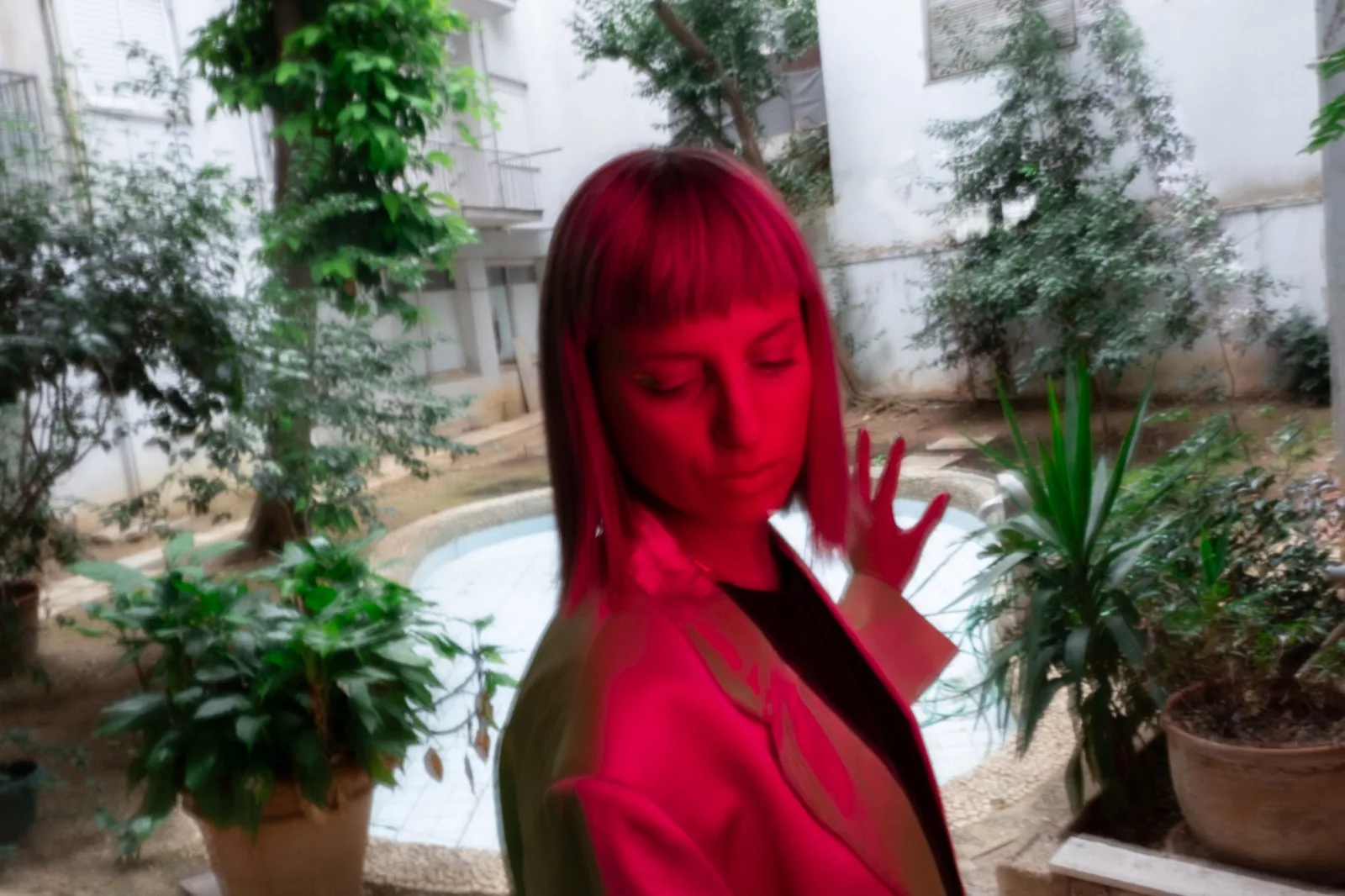
A useful first sentence about AURORA is the one her own materials almost insist on: she is a Norwegian singer, songwriter, and producer whose voice and pop-folk hybrid carry a distinct mythic quality. Her official site frames her work around emotional depth, lyrical complexity, and recurring themes of nature, love, and the human experience, and notes that her live presence is a separate craft — movement, atmosphere, and storytelling that build immersive concert environments. That combination explains the persistent feeling around her music. It feels at once intimate, mythic, vulnerable, and physically alive.
But it is the coherence of her artistic system that makes her worth a longer paragraph than most pop press allows. Aurora is not a voice with a sound. She is a worldview with a voice.
Why she is taken seriously
Critics tend to reach further than usual when writing about her, which is itself a signal. NME called The Gods We Can Touch a seductive expansion of her palette, noted that her focus stayed sharp across the album’s stylistic range, and elsewhere she has been described as a “generational talent” capable of creating transfixing otherworlds. On What Happened to the Heart?, reviewers reached for phrases like heavy, ravey call for humanity, linking the record’s conceptual frame to an open letter from Indigenous climate activists. The relevant move is that the language critics use about her tracks the language she uses about herself. She is a writer whose songs come with a stated ethical position, and the reviews honour the position.
This is what distinguishes her from the broader category of quirky alt-pop voice with strong visuals. Many singers in that category have a recognisable sound. Aurora has a sound that belongs to a coherent imagination — one in which nature, empathy, spirituality, shame, freedom, the body, and politics are not separate themes but parts of a single moral world.
A voice that is also an instrument
The technical thing first. AURORA’s voice does several specific things rarely combined in current pop. It can produce a clean, almost choral upper register; a low, breath-forward whisper that sits inside the mix; and a sharply percussive consonantal attack used as rhythm rather than melody. Her vocal performances often layer those three modes inside the same song, which is why her tracks frequently feel orchestrated even when the underlying instrumentation is sparse. The voice is not a vehicle for the lyric. It is part of the arrangement.
The result, repeatedly, is music that holds up at multiple distances. Heard in passing, her songs are catchy and clearly recognisable. Heard closely, they reveal a substantial amount of craft in placement, breath, and dynamic restraint. That is rare in commercial pop, which tends to optimise for one distance at the cost of the other.
What the songs are actually arguing for
In interviews she returns, repeatedly, to two ideas. The first is that all art is from nature, and that nature is a long-time intimate force in her life. The second is human connectedness — both the wonder of it and the danger of its current erosion. Her public writing emphasises activism and the harm of emotional numbness. Her songs are animated by reverence, but the object of reverence is rarely doctrinal. It is more often life itself, the Earth, or the still-available possibility of human tenderness.
That is why her work often feels spiritually charged without being conventionally religious. The vocabulary is sacred. The object of the sacred has shifted — from a particular deity to the living world and the people inside it. Whether or not one shares that frame, the consistency of it is what makes her catalogue cohere as more than the sum of singles.
AURORA’s songs are not arguments for an idea. They are an idea performed at the volume of music.
TOMORA, and the refusal to repeat
The most recent signal of her continuing range is TOMORA, her collaboration with Tom Rowlands of The Chemical Brothers. Recent coverage frames it as a new dance-pop project built around empathy, urgency, and awakening in a distressed world. Read alongside the tenth-anniversary expansion her official site is currently foregrounding around her debut era, the picture is of an artist who is willing to widen her sonic frame without losing the moral one. That matters because the pop industry punishes artists who pivot too late and rewards those who pivot too cynically; AURORA appears to be doing neither.
For a publication interested in slow, attentive listening, this is the more useful fact than any single album. AURORA gives a reader several legitimate angles at once. You can read her as a vocalist with an unusual timbral identity. You can read her as a mythic eco-pop thinker. You can read her as a stage artist whose body language carries part of the song’s meaning. You can read her as an activist whose politics are inseparable from her aesthetics. And you can read her as an artist still evolving, which — in pop — is the rarest thing of all.
Why she belongs in a slow-listening magazine
This magazine writes mostly about music whose registers are quieter and slower than AURORA’s. She does not always sit inside that register; her records contain real drama, real volume, and real bodily energy. But her work belongs in a slow-listening publication because of how she handles meaning. She trusts listeners with complexity. She refuses to flatten her own conviction for radio. She treats the song as a vehicle for a worldview rather than for a chorus.
In a moment when much of pop is built for short attention and instant resolution, AURORA writes pop that is willing to ask for the room’s full attention and use it for something morally serious. That is the version of cinematic worth defending, even at festival volume.
Sources
- AURORA — official site, aurora-music.com.
- The Gods We Can Touch review, NME, nme.com.
- Aurora interview: “Nature has been my secret lover for a long time, now it’s official,” Imagine5, imagine5.com.
- Public reporting on TOMORA and recent collaborations — current artist coverage, mid-2026.
Listen
A short entry path across her catalogue:
- Runaway (Aurora’s early signature, voice as instrument)
- Cure for Me — The Gods We Can Touch (rhythmic, percussive vocal)
- Some Type of Skin — What Happened to the Heart? (the moral / ecological register)
- Murder Song (5, 4, 3, 2, 1) — for those who want the unfiltered theatricality
Continue reading
- Why complex music sharpens creative listening — the cognitive temperament that returns to layered records like AURORA’s.
- How melancholic songs shape emotion and memory — why music with strong moral atmosphere stays in the body longer than music designed to please.
- Bon Iver and the architecture of emotional safety — a different version of pop with conviction.